• Hi guest! As you can see, the new Wizard Forums has been revived, and we are glad to have you visiting our site! However, it would be really helpful, both to you and us, if you registered on our website! Registering allows you to see all posts, and make posts yourself, which would be great if you could share your knowledge and opinions with us! You could also make posts to ask questions!

Lead pouring/casting - traditional folk healing ritual

avrorael

Neophyte
Joined
Apr 26, 2026
Messages
9
Reaction score
29
123.jpg


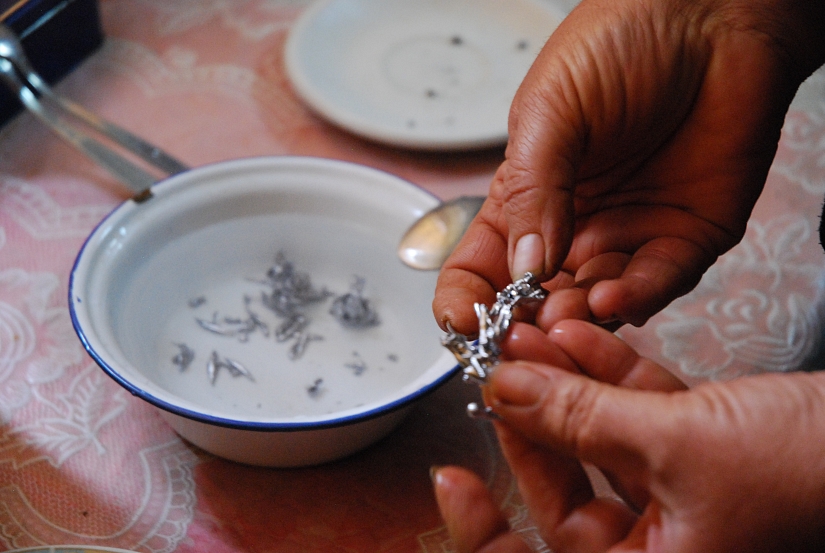
Lead pouring, also known as bullet pouring, is a very popular ritual healing practice found throughout the Balkans and Turkey, as well as in several other European countries and even parts of North Africa. It continues to be practiced to this day, mainly by elderly women in rural communities.

This practice is used to treat severe fear, fright, shock, and accumulated stress. Each folk healer or ritual practitioner has their own incantations (healing words), which are carefully guarded in secrecy. According to traditional belief, if these words are revealed to another person, they lose their power. They may only be passed on to a chosen successor when the healer decides to stop practicing.

The ritual itself involves melting a piece of lead, in the past, bullets were used, since bullets were commonly made of lead, in a metal container over a fire. The molten lead is then poured into a bowl of clean water held above the affected person (that is, the frightened individual seeking help). As the lead cools and solidifies in the water, it takes on various shapes and forms. By interpreting these shapes, the healer determines the source of the person's fear or distress.
This practice can also be regarded as a form of divination known as molybdomancy. It is said that the lead absorbs the negative influences and fear affecting the person. Once the ritual is complete, the lead must be discarded.

Based on numerous surviving ethnographic records, as well as my own observations and experience, many people who undergo this ritual report relief from their fear and are able to return to their normal rhythm of life.

If you are familiar with this healing method or have heard about it, I would be glad to hear your thoughts and experiences on the subject.
 

Morell

Apostle
Joined
Jul 5, 2024
Messages
2,053
Reaction score
4,441
Awards
20
Only one note: lead is toxic metal. Use alternatives to prevent poisoning... especially if you want to do more of it.

From what I know Bismuth is recommended to use instead.

Bismuth vs. Lead: Why Bismuth Is Replacing Lead
With evidence of widespread use dating back to ancient Rome, lead has been a popular metal for millennia. However, despite being flexible and useful for diverse applications, it has fallen out of favor in recent decades. Notably, growing concerns around lead’s significant health and environmental safety risks have driven companies to search for alternatives. In that search, bismuth has emerged as the top contender.

Bismuth Versus Lead
Lead is dense (11.34 g/cm³) and malleable with a melting point of 621.4 degrees Fahrenheit (327.5 degrees Celsius). These properties make it easy to manipulate and mold. Historically, lead was the material of choice for applications, including ballast, pipes, casting, and soldering.

Bismuth has a similar density (9.78 g/cm³) and a lower melting point of 520.5 degrees Fahrenheit (271.5 degrees Celsius). It’s suitable for weight-critical applications, fusible alloys, and products that require minimal thermal transfer. More importantly, bismuth is nontoxic, biologically inert, and safer for consumers.

Companies choosing between lead and bismuth typically consider three factors:

Toxicity: The World Health Organization classifies lead as a toxic substance — there’s no safe level of exposure. It poses profound health risks, including kidney damage, cardiovascular problems, and stillbirth. Nontoxic bismuth is a safer alternative for consumer-facing applications.
Cost considerations: Lead is affordable and easy to access, thanks to an abundant supply and established mining and refining processes. Bismuth is more expensive and requires higher initial cash outlays. The purchase price is just one consideration; since bismuth requires fewer health and environmental protections, it creates long-term savings.
Environmental impact: Lead has documented environmental hazards; it can contaminate water, reduce biodiversity, and damage animals’ reproductive and neurological systems. Low-toxicity bismuth is a green alternative. Used as a lead replacement, it can reduce the environmental impact of heavy metals.
The Shift From Lead to Bismuth
The risks of lead have prompted a shift toward alternative metals. To avoid the practical and regulatory dangers of lead poisoning and environmental pollution, businesses are switching from lead to bismuth.

Bismuth is particularly attractive to additive manufacturers. Its properties provide important advantages for printing alloys:

Melting point and printer compatibility: Lead’s higher melting point requires a printer that can maintain adequate temperatures. Since bismuth has a lower melting point, it’s suitable for lower-temperature equipment.
Print speed and precision: Lead solidifies quickly and tends to warp, making it difficult to maintain print precision, detail, and integrity. Bismuth has a stable and predictable cooling behavior that enhances precision and quality.
Material interaction and printer wear: Lead is malleable but abrasive and may increase wear on high-contact printer components. Bismuth alloys offer a more printer-friendly solution. Pure bismuth is brittle and should be kept in a dry, closed container.
Health and environmental considerations: Lead can create toxic vapor or dust, which necessitates extensive safety protocols. Bismuth is a lower-risk option for high traffic environments; it’s also easier to dispose of or recycle.
Alloy behavior and stability. The inherent softness of lead can limit print strength and stability. Bismuth alloys are stable, so they enhance dimensional accuracy and structural integrity.


Make the Switch to Bismuth
Lead has been used for centuries, but modern concerns around public health and environmental safety mean that companies must opt for safer alternatives. With its similar properties and nontoxic nature, bismuth is a key contender as a preferred substitute.

Belmont Metals provides a variety of bismuth ready for your next project. Reach out to our team for more information.

Article taken from belmontmetals(dot)com
 

ewiz

Neophyte
Joined
Mar 3, 2024
Messages
23
Reaction score
24
Awards
1
Sounds like it could be an effective method for treating fear and anxiety. It reminds me of Psychomagic by Alejandro Jodorowsky, which may interest you.

Tin would also be a safer alternative, as would wax. I've not done any sort of healing ritual like this, but I have dropped wax into water for divination purposes (carromancy) and would say it's worth a try. Using metal should work in a similar way.
 
Joined
Sep 21, 2025
Messages
207
Reaction score
495
Awards
3
Seconding lead being toxic. Lead poisoning is cumulative over a lifetime - you can NEVER rid your body of it. It stays in your bones and can cause added cognitive impairment decades later as we age and calcium leeches from our bones. All lead exposure is harmful exposure.

As an alternative, carromancy/wax casting works the same way as well, and is much easier to work with. Not quite the same 3D shape profile, but it's an option.
 

L’chaimGoldberg

Apprentice
Joined
Mar 29, 2026
Messages
60
Reaction score
83
Awards
1
Seconding lead being toxic. Lead poisoning is cumulative over a lifetime - you can NEVER rid your body of it. It stays in your bones and can cause added cognitive impairment decades later as we age and calcium leeches from our bones. All lead exposure is harmful exposure.

As an alternative, carromancy/wax casting works the same way as well, and is much easier to work with. Not quite the same 3D shape profile, but it's an option.
In Germany now they use tin, pure tin actually has a lower melting point than lead so….
 

Yazata

Moderator
Staff member
Sentinel
Archivist
Benefactor
Vendor
Joined
Sep 27, 2021
Messages
2,934
Reaction score
9,010
Awards
35
Nobody is eating the lead though..
Maybe there's some occult significance to using lead as it is Saturnian / binding the (possible) curse.
 
Joined
Sep 21, 2025
Messages
207
Reaction score
495
Awards
3
Nobody is eating the lead though..
Maybe there's some occult significance to using lead as it is Saturnian / binding the (possible) curse.
No, but handling it with bare hands is enough to cause exposure. Most lead poisoning happens from contaminated air and dust that people might ingest or inhale. So the water being used in the bowl is a lead contamination risk, for example. Heating it indoors as well without good ventilation and a respirator. Do some of these things over and over for years, and it can lead to real effects.

Please, Log in or Register to view URLs content!
, but if there's safer alternatives, it's worth using them instead.
 

avrorael

Neophyte
Joined
Apr 26, 2026
Messages
9
Reaction score
29
In my post, I discuss a traditional folk practice that has been performed for centuries. It is important to clarify that this is not something a person can simply do on their own unless they have been taught the precise ritual steps and procedures and have received the appropriate training. Therefore, anyone who attempts to imitate such practices does so entirely at their own risk. And yes, some people use tin as a substitute for lead.
 

ewiz

Neophyte
Joined
Mar 3, 2024
Messages
23
Reaction score
24
Awards
1
Nobody is eating the lead though..
Maybe there's some occult significance to using lead as it is Saturnian / binding the (possible) curse.
Melting it inappropriately can be more dangerous than swallowing it whole, because of the microscopic particles in the fumes. You could unknowingly expose yourself to a very large dose of lead if you don't know what you're doing. That said, there could certainly be good metaphysical reasons to use lead.

People cast their own lead sinkers for fishing all the time, all over the world. No difference in the risks involved. Limiting heavy metal exposure and being very cautious when dealing with it is very important. For most people, it would be wise to avoid dealing with heavy and/or molten metal at all unless you have experience, or someone with experience instructs you on how to do it safely.
 

duager

Neophyte
Joined
Jul 26, 2025
Messages
31
Reaction score
21
In the Russian magical tradition, lead casting is also a fairly widespread method of ritual cleansing. It is generally considered to be more powerful than wax casting for the removal of negative influences.

Historically, lead casting was especially common in Muslim folk magical traditions. Owing to its perceived effectiveness and relative simplicity, however, it spread far beyond its original cultural context. Today, numerous practitioners have developed their own ritual systems and methods incorporating molten lead.

1. Preparation for the Ritual

Successful performance of the ritual requires careful preparation. The practitioner must first determine the purpose of the working and, most importantly, clearly identify the type of negative influence that is to be removed. It is also necessary to assess both the practitioner's capabilities and the client's readiness, since the ritual is considered energetically demanding for everyone involved.

The location and timing of the ritual should be selected in advance. Prepare the altar, magical implements and tools, as well as the lead, a vessel for melting the lead, a container for pouring it into, a source of heat, and an appropriate incantation.

2. Preparing the Lead

A single casting usually requires approximately 60–70 grams of lead, although some practitioners use only 15–20 grams for smaller castings.

Lead can be obtained from fishing sinkers, lead shot sold in hunting supply stores, or discarded wheel-balancing weights from tire repair shops.

Immediately before the ritual, the practitioner seeks to establish a connection with the material. The client may hold the lead in their hands or place small pieces of lead on areas of physical discomfort. The practitioner, in turn, prepares mentally for the magical operation, intending that the molten lead will absorb the negative influence and, once solidified, seal it within itself.

3. Melting the Lead

Lead is a soft, malleable metal and can be melted relatively easily under controlled conditions. A suitable metal container is used to hold the lead while it is heated.

The lead is heated over a strong flame with great care, observing all necessary safety precautions to prevent burns from accidental splashes of molten metal. If the ritual is performed indoors, adequate ventilation is considered essential, although many practitioners prefer conducting lead castings outdoors.

4. The Incantation

The spoken incantation is regarded as an essential component of the ritual. It serves as the verbal magical instrument through which the practitioner's intention is defined, articulated, and strengthened, much like the spoken formula accompanying a runic working.

The incantation should be selected and memorized beforehand, or at the very least read confidently from a written text. It is traditionally recited during both the melting and the pouring of the lead. Many practitioners also employ additional formulas before beginning the ritual, upon its completion, during the disposal of the castings, and for the water used in the working.

5. Pouring the Lead

The molten lead is carefully poured into a container of water, where it cools rapidly and solidifies. Some practitioners instead pour it into sand or salt.

The exact technique varies according to the individual practitioner's style and method. Once the lead has hardened, it is removed, examined, and interpreted. It is generally recommended not to handle the casting with bare hands, but instead to wear gloves or use suitable tools.

The number of castings performed during a single session depends upon the practitioner's experience and endurance, the condition of the client, and the outcome of previous castings.

6. Interpretation of the Castings

Interpreting lead castings requires considerable experience. Familiarity with different forms of magical affliction and the traditional methods by which they are believed to be inflicted, combined with symbolic and associative perception, enables the practitioner to derive meaning from the shapes, figures, signs, and patterns formed by the solidified lead.

7. Closing the Ritual and Disposal of the Lead Casting

The conclusion of the ritual includes disposing of the lead casting, cleansing the tools and ritual objects that were used, and, when necessary, purifying and restoring the balance of the space in which the ritual was performed.

If either the practitioner or the client experiences physical exhaustion, emotional distress, or a perceived depletion of energy after the ritual, appropriate restorative measures are traditionally undertaken.

Various methods of disposing of lead castings exist. The most common include casting them into running water, burying them beneath a dead or dried tree, or discarding them with household refuse.

Many contemporary practitioners advocate minimizing unnecessary environmental impact and discourage leaving ritual materials associated with destructive intentions in natural settings. It is also widely believed that if a practitioner respectfully cleanses and prepares the ritual site before beginning the work, the overall effectiveness of the ritual is significantly enhanced.

 
Top