





• Hi guest! As you can see, the new Wizard Forums has been revived, and we are glad to have you visiting our site! However, it would be really helpful, both to you and us, if you registered on our website! Registering allows you to see all posts, and make posts yourself, which would be great if you could share your knowledge and opinions with us! You could also make posts to ask questions!

Journal Martial Arts Energies in Practice

A record of a users' progress or achievements in their particular practice.

HoldAll

Librarian
Staff member
Librarian
Joined
Jul 3, 2023
Messages
5,441
Reaction score
27,357
Awards
16
Please, Log in or Register to view URLs content!
(part 2)

You can also trigger telegraphing behaviour, although it's more a psychological thing. If you feint an attack and your opponent reacts even though not in actual danger, you're showing him or her up as a bundle of nerves, which he or she likely won't be, maybe just a bit apprehensive and jumpy (it's a macho-type challenge – you flinch, you lose – and I guess women are less affected by such silliness). Again, this is a trick to play on a weaker opponent, a stronger one is bound to play such head games with you. As always in such a case, your options will be more limited here, but the other guy telegraphing may give you at least a bit of a head start.

It's yet another reason why it's so important to have a good instructor or sensei: you very rarely notice your own telegraphing. It's something that should have been bred out of you during basic training and
Please, Log in or Register to view URLs content!
, but it can happen all the same. As I mentioned before, sparring and point-fighting like a truth serum, they'll unfailingly bring out your true colours and deflate your ego, which is why it's pointless to order yourself to be courageous, flexible and keep a cool head in any situation (and tell yourself not to flinch or telegraph).

Please, Log in or Register to view URLs content!


Please, Log in or Register to view URLs content!
is quoting boxing history here: prior to his 1936 bout against Joe Louis, Max Schmeling had studied the fight reels of his opponent and noticed a flaw in his game: Louis had a habit of dropping his hand low after throwing a jab instead of immediately retracting it to his guard, thus leaving his chin unprotected. Schmeling was able to capitalize on this weakness just like in the movie clip, winning the fight but losing the rematch. Strictly speaking, it's not telegraphing but neat all the same.

Again, I would like to stress that noticing your opponent's telegraphing is no surefire recipe for success. It can give you an edge but when the other guy's bigger and stronger than you, all you can do is evade and watch the action unfold in all its rumbling predictability from a safer distance – which won't win you fights, of course, but beats getting steamrolled over.

Come to think of it, any pre-arranged partner drill performed slowly could be said to involve telegraphing since you'll not only know how your partner will attack but also when. It's ok when learning new stuff at the dojo but sooner or later you'll have to face unscripted attacks where your opponent doesn't leave himself or herself wide open and won't patiently wait for you to counter or apply an armlock or a choke. It's really easy to lull yourself into a false sense of security otherwise, and I suppose that's why there'll always be martial artists studying 'pure' self-defence systems that have a clever solution for everything (provided that 'everything' doesn't happen all at once!) – you win every time, so what's not to like? The danger here is that you'll get so used to that cosy telegraphing that soon you'll expect every aggressor to announce his dastardly intentions beforehand and then politely cooperate in his own demise.

You know what interests me most about armlocks? Not how to execute them but how to get out of them before it's too late. There's all sorts of videos where someone is attacked with a haymaker, a knife, a club and whatnot, and the smart defender will catch the other guy's arm, twist, turn, maybe add a punch or a kick for good measure, triumphing every time. If the lock is fully applied, leaving you no other chance than to tap out in a dojo setting, ok, but realistically, there's many a slip 'twixt the cup and the lip, and the guy may escape while you're halfway through your twisting and turning his arm, and now he'll really be mad.

'Pure' self-defence systems not only foster a false sense of security, but also of superiority. They seem to proceed from the assumption that all aggressors are dumb and clumsy just like baddies in the movies. And what do dumb and clumsy aggressors do? They'll telegraph their attacks, of course. Any why? Because they're dumb and clumsy, that's why. The further you progress in such dubious systems, the less serious you will take attackers – which is unlikely to happen in karate once you arrive at the sparring stage where more advanced students won't telegraph anything and will (very considerately!) wipe the floor with you. It's when you learn to survive at the start of your sparring career instead of winning a string of easy victories. It also keeps you from getting smug and lazy, which is the last thing you need in fighting.

 

HoldAll

Librarian
Staff member
Librarian
Joined
Jul 3, 2023
Messages
5,441
Reaction score
27,357
Awards
16
A Provisional Summary

I think I've reached the end of the line with this Journal, at least for the time being. Much of my efforts here have been spent on demystifying the martial arts and recounting my actual experiences with them. While the general public has a fairly realistic idea about the martial arts and understands very well by now that they're first and foremost athletic disciplines which involve building muscles, developing robust cardio, and improving flexibility, NewAgers and the more naïve sort of occultist still seem to cling to a romanticized image of invincible masters from the mysterious East with supernatural powers, as if "Enter The Dragon" had just come out. In a way, all martial arts are closed practices: either you pursue them, or you're an outsider with half-baked book knowledge - who nevertheless has a very firm opinion regarding how martial arts should work according to your favourite narratives, irrespective of actual facts.

We have become too used to this imaginary hierarchy where the mind reigns supreme and the body occupies the bottommost rung, hence all these wild speculations about any number of astounding martial arts feats the mind can supposedly compel the body to accomplish. I would argue that it's the other way round in the martial arts and that it's the body that is affecting the mind here, and what's more, that it's the body that generates energies all by itself.

As opposed to the mind, the body's possibilities are restricted by its corporality. It's not only subject to gravity, its anatomy also permits it a limited number of movements; practicing martial arts will bring your mind back down to earth, put an end to its unruly flights of fancy and make it return to its primary task: processing sensory input provided by the body and thus perceiving the world as a flesh-and-blood being. It may be a daring thought but my theory is that performing martial arts techniques in a well-coordinated, focussed manner will help streamline your mental processes as well, to the exclusion of redundant cogitation and daydreaming; it will bring you firmly back to the Here and Now where you belong, back into the body you inhabit.

Please, Log in or Register to view URLs content!


There are all kinds of fanciful explanations and interpretations for this weird kata but for me, it's the most extreme example of a kata making it as hard as possible for a karateka to generate power. The idea is to maintain a solid straddle stance (kiba dachi) while performing all sorts of punches and blocks that would normally require the thrust of hip movements behind them to be effective. If your techniques are strong despite that handicap, you're ready for advanced class.

In my model, it's exclusively the body that creates martial arts energies. It can't be any other way. The mind may be able to sense them but physical movements are where they originate. I think there is too much emphasis on the 'software' aspect of martial arts and a conscious avoidance of the 'hardware' subject in occulture thinking, as if physical development was something of an embarrassing side-effect of martial arts practice. What's more, laypeople seem to focus exclusively on what the limbs can do (e.g. breaking bricks, performing spectacular jumping kicks) and ignore the fact that they're attached to the central hub of the principal kinetic chain, i.e. the trunk, without the involvement of which all that exotic flouncing about is useless. Martial arts are about forging all parts of the body into a single cohesive unit, and here we finally arrive at the hara, the fulcrum of all throws, the foundation of all strikes. As I've mentioned before, it's the support and postural muscles that are most important in martial arts, followed by the leg muscles for stability and only then by the bicep, and if you want to strengthen your hara, do core exercises religiously, and no, qigong won't cut, it's muscle mass you want to stabilize your techniques.

As my MA energies criteria so far include intent, focus, intensity, control, and skill, I would argue now that true martial arts energies additionally require strength and speed, and by this I mean strength and speed relative to yourself and your own potential, NOT in comparison to others. A petite woman with excellent, fast techniques can create more intense MA energies than a muscle-bound hulk with merely average skills. The same goes for speed – some people are naturally fast because they have a large amount of
Please, Log in or Register to view URLs content!
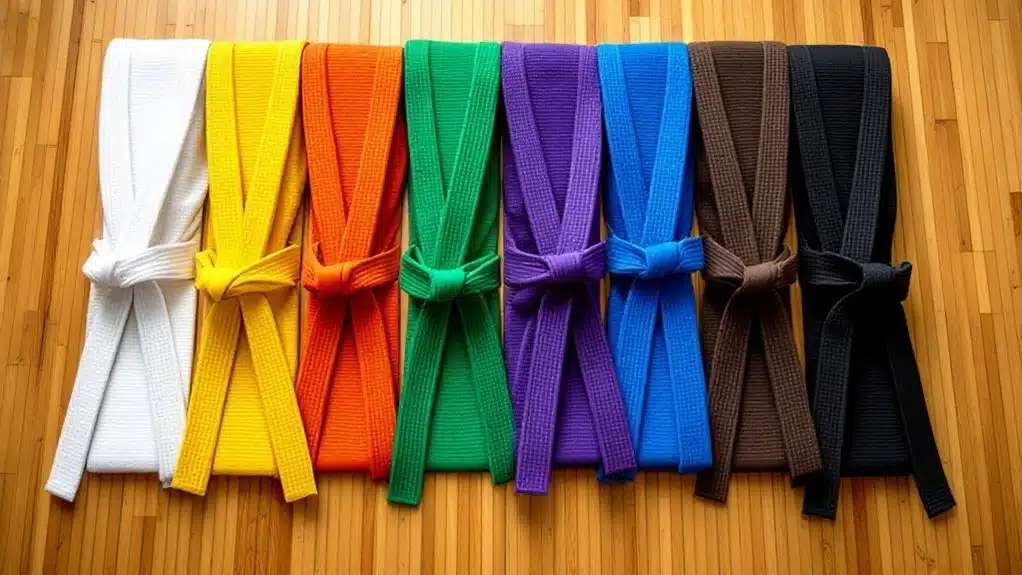
but if their techniques are sloppy and lack power, they'll produce less MA energies than slower but stronger students with better skills; you can sometimes watch this phenomenon in young brown-belt karateka with obvious fighting talent who're quick to hit their intended targets but whose punches and kicks are not yet strong enough to earn them points in competition.

Please, Log in or Register to view URLs content!


What it takes…

Another topic that interests me even more than martial arts energies themselves is their transformative power. Many occultists would be willing to concede that the physical activity of hatha yoga can change the mind but would draw the line at 'violent' martial arts. Is there anything inherently unspiritual about a boxer giving a heavy bag a good work-over? What I'm proposing is a bottom-up approach where the body and the MA energies generated by it will transform the mind. Something like that, we'll see.
 

juanitos

Apprentice
Joined
Oct 20, 2025
Messages
55
Reaction score
45
Awards
2
A Provisional Summary

I think I've reached the end of the line with this Journal, at least for the time being. Much of my efforts here have been spent on demystifying the martial arts and recounting my actual experiences with them. While the general public has a fairly realistic idea about the martial arts and understands very well by now that they're first and foremost athletic disciplines which involve building muscles, developing robust cardio, and improving flexibility, NewAgers and the more naïve sort of occultist still seem to cling to a romanticized image of invincible masters from the mysterious East with supernatural powers, as if "Enter The Dragon" had just come out. In a way, all martial arts are closed practices: either you pursue them, or you're an outsider with half-baked book knowledge - who nevertheless has a very firm opinion regarding how martial arts should work according to your favourite narratives, irrespective of actual facts.

We have become too used to this imaginary hierarchy where the mind reigns supreme and the body occupies the bottommost rung, hence all these wild speculations about any number of astounding martial arts feats the mind can supposedly compel the body to accomplish. I would argue that it's the other way round in the martial arts and that it's the body that is affecting the mind here, and what's more, that it's the body that generates energies all by itself.

As opposed to the mind, the body's possibilities are restricted by its corporality. It's not only subject to gravity, its anatomy also permits it a limited number of movements; practicing martial arts will bring your mind back down to earth, put an end to its unruly flights of fancy and make it return to its primary task: processing sensory input provided by the body and thus perceiving the world as a flesh-and-blood being. It may be a daring thought but my theory is that performing martial arts techniques in a well-coordinated, focussed manner will help streamline your mental processes as well, to the exclusion of redundant cogitation and daydreaming; it will bring you firmly back to the Here and Now where you belong, back into the body you inhabit.

Please, Log in or Register to view URLs content!


There are all kinds of fanciful explanations and interpretations for this weird kata but for me, it's the most extreme example of a kata making it as hard as possible for a karateka to generate power. The idea is to maintain a solid straddle stance (
kiba dachi) while performing all sorts of punches and blocks that would normally require the thrust of hip movements behind them to be effective. If your techniques are strong despite that handicap, you're ready for advanced class.

In my model, it's exclusively the body that creates martial arts energies. It can't be any other way. The mind may be able to sense them but physical movements are where they originate. I think there is too much emphasis on the 'software' aspect of martial arts and a conscious avoidance of the 'hardware' subject in occulture thinking, as if physical development was something of an embarrassing side-effect of martial arts practice. What's more, laypeople seem to focus exclusively on what the limbs can do (e.g. breaking bricks, performing spectacular jumping kicks) and ignore the fact that they're attached to the central hub of the principal kinetic chain, i.e. the trunk, without the involvement of which all that exotic flouncing about is useless. Martial arts are about forging all parts of the body into a single cohesive unit, and here we finally arrive at the hara, the fulcrum of all throws, the foundation of all strikes. As I've mentioned before, it's the support and postural muscles that are most important in martial arts, followed by the leg muscles for stability and only then by the bicep, and if you want to strengthen your hara, do core exercises religiously, and no, qigong won't cut, it's muscle mass you want to stabilize your techniques.

As my MA energies criteria so far include intent, focus, intensity, control, and skill, I would argue now that true martial arts energies additionally require strength and speed, and by this I mean strength and speed relative to yourself and your own potential, NOT in comparison to others. A petite woman with excellent, fast techniques can create more intense MA energies than a muscle-bound hulk with merely average skills. The same goes for speed – some people are naturally fast because they have a large amount of
Please, Log in or Register to view URLs content!
but if their techniques are sloppy and lack power, they'll produce less MA energies than slower but stronger students with better skills; you can sometimes watch this phenomenon in young brown-belt karateka with obvious fighting talent who're quick to hit their intended targets but whose punches and kicks are not yet strong enough to earn them points in competition.

Please, Log in or Register to view URLs content!


What it takes…


Another topic that interests me even more than martial arts energies themselves is their transformative power. Many occultists would be willing to concede that the physical activity of hatha yoga can change the mind but would draw the line at 'violent' martial arts. Is there anything inherently unspiritual about a boxer giving a heavy bag a good work-over? What I'm proposing is a bottom-up approach where the body and the MA energies generated by it will transform the mind. Something like that, we'll see.
Zen was incorporated in japanese martial arts...Musashi also wrote a book The book of the five rings.. So, martial arts energies were not separated from spirituality in japanese martial arts.. The same about Morihei Ueshiba-the founder of Aikido who is said to have attained a high spiritual level. Apparently, the way of the warrior is at the same time a spiritual way, as well...
 

HoldAll

Librarian
Staff member
Librarian
Joined
Jul 3, 2023
Messages
5,441
Reaction score
27,357
Awards
16
Bodymind

I am convinced that practicing martial arts in general, through their intense focus on the body, can be a way of overcoming the
Please, Log in or Register to view URLs content!
which has vexed Western philosophers ever since Plato and Descartes but isn't even recognised in Buddhism which proceeds from the
Please, Log in or Register to view URLs content!
the constituents of which are mutually dependent. However, it's one thing what philosophers and religions teach and quite another how people experience their everyday lives: while the mind is capable of astonishing feats of imagination and creativity, the human body is vulnerable as well as susceptible to diseases, ageing, and eventually death. Nobody likes to be restricted in their experiencing the world, and that's what the body does – it limits the degree to which the mind is able to attain fulfilment: you can picture yourself lying on a beautiful beach but then there's the problem of getting your physical body over there which will invariably spoil your daydream and make you hate people posting their holiday pics on social media.

For these reasons, I don't think there can be an ultimate reconciliation here, and calling for more 'body-awareness' as the sole means to more happiness and well-being is pointless, IMHO. It's no good to chide the kids for their screen-ogling addiction and sternly urge them to get more exercise instead (before going home to watch TV, no doubt). After all, using the imagination as a way of escaping reality has been with us ever since the first humans gathered around a fire and told each other stories. For most of our history, people had to work their fingers to the bone to make a living, and whole empires and nations owed their wealth and power to the manual labour of slaves who had scarcely more than their bodies to call their own.

When I was younger and didn't know any better, I used to move in NewAge circles quite a lot, for my sins. One day I took a young lady from that loosely-knit group whom I was trying to impress to a local karate tournament, straight to the mats (it's usually that informal) where the point-fighting competitions were already in full swing. She became all excited and then gushed "Those guys are so much in their bodies!" which took me a little aback – of course, where else should they be? Well, I suppose compared to all those top-heavy NewAge space cadets of my acquaintance, they really were… who always hastened to declare how crucial it was for a truly spiritual person to balance body and mind, yada, yada, om, om. However, if I understand the Buddhist idea correctly,
Please, Log in or Register to view URLs content!
means monism, not dualism, so there's nothing to balance since there's no separation between body and mind anyway. What my NewAger friend probably meant was that those karate competitors clearly enjoyed being in their bodies by exploring its possibilities in practice instead of fantasizing about it when playing video games, for example.

Playing sports, like e.g. travelling or gardening, is a way of experiencing one's living, breathing body in the real world. However, (unarmed) martial arts are exceptional in that directly engage an opponent’s body with the aim of defeating him or her (which makes arm wrestling a martial art as well, I guess ;)); in other sports, there is either no physical contact with another contestant, or such contact is only made in pursuit the main aim, such as kicking a ball into a goal, slamming it over a net, or dropping it through a hoop. It's what makes martial arts so visceral, and that's never so obvious as in grappling where you're in constant close contact with another person's body: I once watched two judokas warm up before a workshop, and it was quite evident that they were a couple because such playful throws and such sensuous ground-fighting you've never seen; then there's of course that
Please, Log in or Register to view URLs content!
. Sex and unarmed combat are where it gets really up close and personal, and like sex, practicing martial arts provides unique physical experiences, only in a highly structured way.

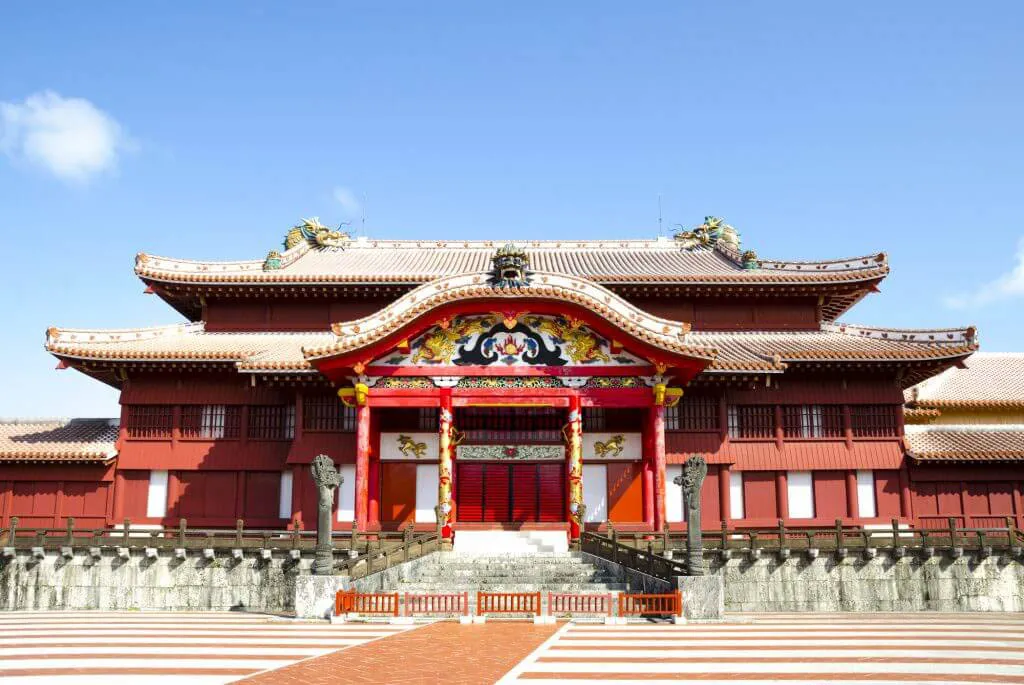
di146_01_shurijo-castle-exterior.webp


Shuri, the birthplace of shotokan karate, was completely destroyed in WW2 (I read somewhere that after the Battle of Okinawa, there were only four houses left standing). The walls of
Please, Log in or Register to view URLs content!
were restored shortly after the war's end, and reconstruction of the palace's main hall was completed in 1992, on the 20th anniversary of the end of the American Occupation in Okinawa.

In my opinion, there's nothing inherently spiritual about the martial arts, and linking karate to Zen Buddhism is a bit of a stretch. Japanese culture in general was indeed influenced by Zen of course, but what you get in karate practice and dojo etiquette is more informed by the customs of Japan and much less by its spirituality. The same goes for the fabled Japanese samurai spirit: Okinawa, the birthplace of karate, used to be an independent kingdom with its own culture and dialect. In 1609, however, it was conquered by the Satsuma samurai clan from mainland Japan, so Okinawan martial artists had hardly any motivation to emulate the warrior culture of the invaders - from which they were excluded anyway. When karate began to spread around the globe after WW2, however, Japan's samurai spirit got exported as part of the same cultural package, and that's probably why it gets so often referenced in connection with karate.

My claim here is that martial arts can help foster whole-body awareness, and this is precisely what can make them spiritual practices, in a sense not generally recognized, even by its own practitioners. I must say this Buddhist bodymind thing has made me curious, it seems to be more sophisticated than that tired old NewAge holism cliché… it's my theory that the body has its own wisdom and can provide the mind with (non-verbal) good counsel; what's more, martial arts energies seem have their own informational content. Let's see if I'm able to get to the bottom of all these ideas.
 

juanitos

Apprentice
Joined
Oct 20, 2025
Messages
55
Reaction score
45
Awards
2
Bodymind

I am convinced that practicing martial arts in general, through their intense focus on the body, can be a way of overcoming the
Please, Log in or Register to view URLs content!
which has vexed Western philosophers ever since Plato and Descartes but isn't even recognised in Buddhism which proceeds from the
Please, Log in or Register to view URLs content!
the constituents of which are mutually dependent. However, it's one thing what philosophers and religions teach and quite another how people experience their everyday lives: while the mind is capable of astonishing feats of imagination and creativity, the human body is vulnerable as well as susceptible to diseases, ageing, and eventually death. Nobody likes to be restricted in their experiencing the world, and that's what the body does – it limits the degree to which the mind is able to attain fulfilment: you can picture yourself lying on a beautiful beach but then there's the problem of getting your physical body over there which will invariably spoil your daydream and make you hate people posting their holiday pics on social media.

For these reasons, I don't think there can be an ultimate reconciliation here, and calling for more 'body-awareness' as the sole means to more happiness and well-being is pointless, IMHO. It's no good to chide the kids for their screen-ogling addiction and sternly urge them to get more exercise instead (before going home to watch TV, no doubt). After all, using the imagination as a way of escaping reality has been with us ever since the first humans gathered around a fire and told each other stories. For most of our history, people had to work their fingers to the bone to make a living, and whole empires and nations owed their wealth and power to the manual labour of slaves who had scarcely more than their bodies to call their own.

When I was younger and didn't know any better, I used to move in NewAge circles quite a lot, for my sins. One day I took a young lady from that loosely-knit group whom I was trying to impress to a local karate tournament, straight to the mats (it's usually that informal) where the point-fighting competitions were already in full swing. She became all excited and then gushed "Those guys are so much in their bodies!" which took me a little aback – of course, where else should they be? Well, I suppose compared to all those top-heavy NewAge space cadets of my acquaintance, they really were… who always hastened to declare how crucial it was for a truly spiritual person to balance body and mind, yada, yada, om, om. However, if I understand the Buddhist idea correctly,
Please, Log in or Register to view URLs content!
means monism, not dualism, so there's nothing to balance since there's no separation between body and mind anyway. What my NewAger friend probably meant was that those karate competitors clearly enjoyed being in their bodies by exploring its possibilities in practice instead of fantasizing about it when playing video games, for example.

Playing sports, like e.g. travelling or gardening, is a way of experiencing one's living, breathing body in the real world. However, (unarmed) martial arts are exceptional in that directly engage an opponent’s body with the aim of defeating him or her (which makes arm wrestling a martial art as well, I guess ;)); in other sports, there is either no physical contact with another contestant, or such contact is only made in pursuit the main aim, such as kicking a ball into a goal, slamming it over a net, or dropping it through a hoop. It's what makes martial arts so visceral, and that's never so obvious as in grappling where you're in constant close contact with another person's body: I once watched two judokas warm up before a workshop, and it was quite evident that they were a couple because such playful throws and such sensuous ground-fighting you've never seen; then there's of course that
Please, Log in or Register to view URLs content!
. Sex and unarmed combat are where it gets really up close and personal, and like sex, practicing martial arts provides unique physical experiences, only in a highly structured way.

di146_01_shurijo-castle-exterior.webp


Shuri, the birthplace of shotokan karate, was completely destroyed in WW2 (I read somewhere that after the Battle of Okinawa, there were only four houses left standing). The walls of
Please, Log in or Register to view URLs content!
were restored shortly after the war's end, and reconstruction of the palace's main hall was completed in 1992, on the 20th anniversary of the end of the American Occupation in Okinawa.

In my opinion, there's nothing inherently spiritual about the martial arts, and linking karate to Zen Buddhism is a bit of a stretch. Japanese culture in general was indeed influenced by Zen of course, but what you get in karate practice and dojo etiquette is more informed by the customs of Japan and much less by its spirituality. The same goes for the fabled Japanese samurai spirit: Okinawa, the birthplace of karate, used to be an independent kingdom with its own culture and dialect. In 1609, however, it was conquered by the Satsuma samurai clan from mainland Japan, so Okinawan martial artists had hardly any motivation to emulate the warrior culture of the invaders - from which they were excluded anyway. When karate began to spread around the globe after WW2, however, Japan's samurai spirit got exported as part of the same cultural package, and that's probably why it gets so often referenced in connection with karate.

My claim here is that martial arts can help foster whole-body awareness, and this is precisely what can make them spiritual practices, in a sense not generally recognized, even by its own practitioners. I must say this Buddhist bodymind thing has made me curious, it seems to be more sophisticated than that tired old NewAge holism cliché… it's my theory that the body has its own wisdom and can provide the mind with (non-verbal) good counsel; what's more, martial arts energies seem have their own informational content. Let's see if I'm able to get to the bottom of all these ideas.
yeah...beyond any abstract concepts ..when practicing a martial art one must cultivate one's awareness!! cultivating this link- body-spirit- as you explain perfectly.. Cultivating awareness = is being already deep in a spiritual stuff..!
 

HoldAll

Librarian
Staff member
Librarian
Joined
Jul 3, 2023
Messages
5,441
Reaction score
27,357
Awards
16
The Path

Most religions don't seem to appreciate the idea of the spiritual path (do in Japanese), of a new believer's gradual development towards their ideals. It's "Here's what we teach, swallow it whole or else, and here are our commandments, heed them from now on!", all or nothing, black and white, and if you don't comply this instant, you're a goddamn sinner who'll surely burn in hell. So much impatience, so little understanding for the natural inertia of human nature… You can't become a saint or sage from one minute to the next, what's been sown in you needs time to grow and unfold.

Turning karate into a spiritual path is an option, not a mandatory requirement. Personally, I would be very suspicious of any sensei given to delivering lectures about ethics, Zen, or Buddhism in general, and it would be rather frowned upon where I live anyway. As my own sensei is fond of saying: "All we can ever do is prepare a nice buffet, what students take from it is their business." Let beginners gather their own experiences and reap their own benefits from them, else you're robbing them of the opportunity of growing independently as a person. It's a bodymind path (do), which means that knowledge and wisdom will accumulate in your body and subconscious mind, and they may not lend themselves to being expressed verbally; you can't help noticing the transformation of your body of course but may not even be aware of your mind changing subtly as well.

For beginners, practicing karate will first and foremost mean strengthening their backbone in literal sense, for it's the trunk's support and postural muscles that will provide the 'launching platform' for all punches and blocks. In karate, that means standing up straight with one's head held up high, which often poses problems for rookies who are habitual slouches or sometimes don't even notice themselves that they're leaning slightly forward or backwards. There are whole schools of psychology claiming that
Please, Log in or Register to view URLs content!
, distorting one's natural posture so that e.g. a shy or anxious person will be chronically hunched over as if expecting being physically assaulted at every moment. Well, karate basic training (
Please, Log in or Register to view URLs content!
) is a bit like army bootcamp – you're forced to stand proudly upright regardless of any old scars that may mar your psyche. It may be my imagination but I think this quasi-military bearing will affect students' personalities over time; karatekas tend to be very outspoken, like to call a spade a spade, and talk plainly, straight to the point.

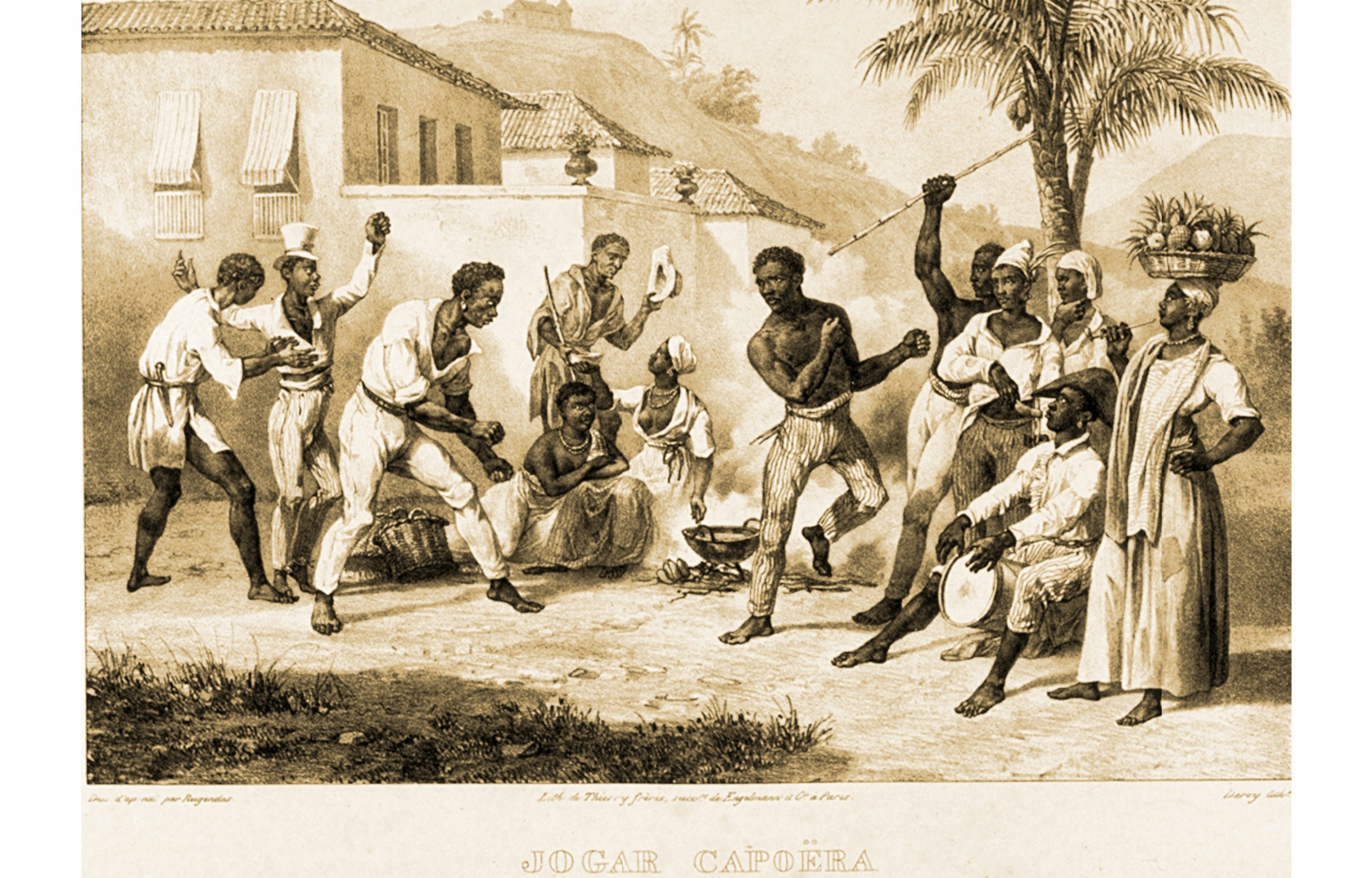
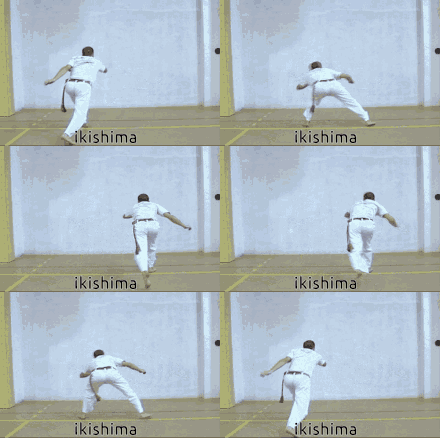
How do you handle disputes? How do you respond to imminent danger? By evading, dodging, and ducking? That may be the capoeira way (and it's just as valid!) but karate is about meeting challenges head-on; it's more like standing chest to chest and screaming at each other instead of exchanging angry texts. Again, if that's not your style, too bad, kihon partner drills are as confrontational as it gets, and it's a martial art, after all.

Please, Log in or Register to view URLs content!


"If our aim is a harmonious development of man, then for us, dances and movements are a means of combining the mind and the feeling with movements of the body and manifesting them together. In all things, we have the aim to develop something which cannot be developed directly or mechanically." (G. I. Gurdjieff)


If all this doesn't sound very spiritual to you, I'd say it's a matter of definition. Just look at
Please, Log in or Register to view URLs content!
– they're not about pillow-hugging body therapy either, and you'll likely have to practice even harder (coordination!) to master them than basic karate techniques. Kihon has been designed to press beginners remorselessly into a specific mould; however, so does hatha yoga, if you think about it.

My theory is that karate basic technique and kata practice will help promote a certain attitude or mentality in karate beginners by making them adopt certain postures and execute certain movements that may be initially foreign to them; in this, they'll acquire a martial body language that's unashamedly aggressive and direct. Take, for example, the very first formal stance you'll learn, the zenkutsu dachi (forward stance). 70% to 80% of your weight should be on your front foot, and this weight distribution ratio will unmistakably signal that you're hell bent on pushing forward regardless. Conversely, 50:50 would mean that you intend to keep all your options (including retreating) open, and that's in fact how karate point-fighters stand, but here disengaging from an opponent will be awkward when most of your weight is on your front foot, forcing you to fully commit yourself - even if that may run counter your usual over-cautious mentality.

karate-schlag-wow-zuki.jpg


Forward stance and punch to the midsection (zenkutsu dachi, oi zuki chudan)

In daily life, it's your body that expresses your emotions; in karate kihon (and presumably also in Gurdjieff's sacred dances as well as in hatha yoga), it's the other way around – it's the body that will act on your emotions, and I think on your mind, too. Karate can be a sport like any other, a spiritual path, or body therapy, and the best thing is, nobody will force you to choose, just practice and feel how it is for you.
 

juanitos

Apprentice
Joined
Oct 20, 2025
Messages
55
Reaction score
45
Awards
2
The Path

Most religions don't seem to appreciate the idea of the spiritual path (do in Japanese), of a new believer's gradual development towards their ideals. It's "Here's what we teach, swallow it whole or else, and here are our commandments, heed them from now on!", all or nothing, black and white, and if you don't comply this instant, you're a goddamn sinner who'll surely burn in hell. So much impatience, so little understanding for the natural inertia of human nature… You can't become a saint or sage from one minute to the next, what's been sown in you needs time to grow and unfold.

Turning karate into a spiritual path is an option, not a mandatory requirement. Personally, I would be very suspicious of any sensei given to delivering lectures about ethics, Zen, or Buddhism in general, and it would be rather frowned upon where I live anyway. As my own sensei is fond of saying: "All we can ever do is prepare a nice buffet, what students take from it is their business." Let beginners gather their own experiences and reap their own benefits from them, else you're robbing them of the opportunity of growing independently as a person. It's a bodymind path (do), which means that knowledge and wisdom will accumulate in your body and subconscious mind, and they may not lend themselves to being expressed verbally; you can't help noticing the transformation of your body of course but may not even be aware of your mind changing subtly as well.

For beginners, practicing karate will first and foremost mean strengthening their backbone in literal sense, for it's the trunk's support and postural muscles that will provide the 'launching platform' for all punches and blocks. In karate, that means standing up straight with one's head held up high, which often poses problems for rookies who are habitual slouches or sometimes don't even notice themselves that they're leaning slightly forward or backwards. There are whole schools of psychology claiming that
Please, Log in or Register to view URLs content!
, distorting one's natural posture so that e.g. a shy or anxious person will be chronically hunched over as if expecting being physically assaulted at every moment. Well, karate basic training (
Please, Log in or Register to view URLs content!
) is a bit like army bootcamp – you're forced to stand proudly upright regardless of any old scars that may mar your psyche. It may be my imagination but I think this quasi-military bearing will affect students' personalities over time; karatekas tend to be very outspoken, like to call a spade a spade, and talk plainly, straight to the point.

How do you handle disputes? How do you respond to imminent danger? By evading, dodging, and ducking? That may be the capoeira way (and it's just as valid!) but karate is about meeting challenges head-on; it's more like standing chest to chest and screaming at each other instead of exchanging angry texts. Again, if that's not your style, too bad, kihon partner drills are as confrontational as it gets, and it's a martial art, after all.

Please, Log in or Register to view URLs content!


"If our aim is a harmonious development of man, then for us, dances and movements are a means of combining the mind and the feeling with movements of the body and manifesting them together. In all things, we have the aim to develop something which cannot be developed directly or mechanically." (G. I. Gurdjieff)


If all this doesn't sound very spiritual to you, I'd say it's a matter of definition. Just look at
Please, Log in or Register to view URLs content!
– they're not about pillow-hugging body therapy either, and you'll likely have to practice even harder (coordination!) to master them than basic karate techniques. Kihon has been designed to press beginners remorselessly into a specific mould; however, so does hatha yoga, if you think about it.

My theory is that karate basic technique and kata practice will help promote a certain attitude or mentality in karate beginners by making them adopt certain postures and execute certain movements that may be initially foreign to them; in this, they'll acquire a martial body language that's unashamedly aggressive and direct. Take, for example, the very first formal stance you'll learn, the zenkutsu dachi (forward stance). 70% to 80% of your weight should be on your front foot, and this weight distribution ratio will unmistakably signal that you're hell bent on pushing forward regardless. Conversely, 50:50 would mean that you intend to keep all your options (including retreating) open, and that's in fact how karate point-fighters stand, but here disengaging from an opponent will be awkward when most of your weight is on your front foot, forcing you to fully commit yourself - even if that may run counter your usual over-cautious mentality.

karate-schlag-wow-zuki.jpg


Forward stance and punch to the midsection (zenkutsu dachi, oi zuki chudan)

In daily life, it's your body that expresses your emotions; in karate kihon (and presumably also in Gurdjieff's sacred dances as well as in hatha yoga), it's the other way around – it's the body that will act on your emotions, and I think on your mind, too. Karate can be a sport like any other, a spiritual path, or body therapy, and the best thing is, nobody will force you to choose, just practice and feel how it is for you.
yes..Gurdjieff, studied a lot sufi dances and integrated them in his system- the fourth way. The point is to include awareness in any movement, dance , martial art, or whatever,, not to do it mechanically..
 

HoldAll

Librarian
Staff member
Librarian
Joined
Jul 3, 2023
Messages
5,441
Reaction score
27,357
Awards
16
Enforced Bravery

There are countless psychology master theses on the impact of martial arts on mental health. Now and then a college student would show up at our dojo and hand out questionnaires, later it was social media where my karate buddies were pestered with requests to fill out the same academic questionnaires with hardly any variation compared to their analogue counterparts. I've read a few of those papers but was unimpressed – the way martial arts will affect you (and if they are able to cause changes in you to any major degree) will be so complex, personal, and mostly subconscious that it can't be captured by any soft science inquiry, in my view. So will practicing karate make you more self-assured? All I could think of in my first years was how incredibly clumsy I was when compared to my fellow students, so my self-confidence actually dropped, I'd say; I bought my first karate book (Nakayama's "Best Karate") because I was apparently too dumb to remember the choreography of the first shotokan kata. Or questions about increased self-discipline: in my experience, people who take up karate and stick with it are pretty self-disciplined to begin with, like clear structures, expect firm guidance, don't have a problem with hierarchies, and those who don't fit a similar psychological profile usually quit after a year or two.

However, I think there are also beginners who seek out karate precisely because they lack these qualities, which was certainly true for me. Self-transformation has been a major obsession with me all my adult life, and I was lucky in realising early on that poring over clever books alone won't cut it (knowing what I know now, I'd scratch that 'alone'), and to this day I distrust accounts of other people's allegedly life-changing insights that can be put in words because they mostly follow the traditional "… until I one day woke up and realised…" narrative. It's always upwards and onwards, never sideways (and hardly anyone will tell you proudly of their backsliding anyway), and that's just the directional metaphor; other instances of self-transformation will happen by degree, or so slowly that you don't even notice them or initially misjudge them, and I think this is what happens when you decide to make a martial art your spiritual path. Different martial arts foster different mentalities – while Brazilian jujitsu, in my extremely limited experience, seems to be all about tenacity and capoeira about craftiness, karate epitomises uncompromising bravery, in my opinion.

'Uncompromising bravery' sounds very applaudable but I've written about the unfortunate "Banzai!!" mentality before, and in my first years of sparring and point-fighting I was still very caught up in that foolhardy suicide-attack spirit; only later I came to realise that defending is an art in and of itself which can save you a lot of bruises and embarrassing defeats when employed intelligently.

Please, Log in or Register to view URLs content!


What gives beginners the most problems with this dead simple kata are its turns. As all karate katas symbolise fights against multiple imaginary aggressors, it's important to maintain balance and a solid footing throughout when changing direction.


Every karate kata, without exception, begins with a defensive move. I call kata practice 'fighting in the abstract', and it's a safe way for beginners to develop a warrior mindset before actually confronting a sparring partner later on. Take the first move of shotokan's taikyoku shodan (or also heian shodan) kata: it's a quarter turn to the left with a downward block (gedan barai), not very interesting as such but what it really means that you step directly forward into the path of danger instead of instinctively backing away from it, which is how every sane person would react. That block in itself isn't that sophisticated – it may mean swatting away the hand of somebody trying to grab or shove you, deflect a punch or kick, parry a stab with a quarter staff, sword, or pool noodle, whatever. It's more the attitude that counts, and the idea is nipping an attack in the bud like in this video here:

Please, Log in or Register to view URLs content!


When you constantly retreat, an aggressor with a knife will get you eventually because he has to be lucky only once, so it makes sense to stand firm or even step directly into the attack, get the knife hand safely out of the way and counter after the first or second stab - instead of hoping to get lucky somewhere down the line. That being said, I'd never claim that kata practice can prepare you for real fights, you need a living breathing opponent for that who is determined to nip your attacks in the bud, make things difficult for you, does his or her level best to behave unpredictably, and certainly won't be so kind as to cooperate in your eventual victory.

All these thoughts will be lost on beginners of course who'll have trouble remembering the choreography of the kata just like me, whose stances are still wobbly (esp. after turns), and who often forget the kata's two
Please, Log in or Register to view URLs content!
(fighting shouts) - it took me over two decades to appreciate that first kata move and realise that it was so emblematic for the fighting spirit of karate. Did I become braver in life as a result of my karate practice? No idea. Having that insight described above was rewarding though. Maybe the reason why I had it in the first place was because I've changed as person and wouldn't have realised the significance of that simple move had I quit.

Or this bit of Zen: before the beginning of the kata, the ideal state of mind would be
Please, Log in or Register to view URLs content!
(no-mind) as contrasted with being lost in thought. It's immaterial whether you're just walking to your car or through a dangerous neighbourhood where you could be mugged at any moment; you're not prepared for anything, don't hope that nothing untoward will happen to you, don't compose tomorrow's grocery shopping list in your head, think about the weather, the economy, or politics. Your mind is a blank, registering everything, not clinging to anything, when you're suddenly attacked from your left. Now a lot of people would go "This can't be happening! Oh my god, the guy's serious! What on earth… ouch!". In a genuine state of no-mind, there are no surprises. The birds are singing, the trees are blooming, and a guy in a clown suit with a rusty pitchfork comes at you from the left, so you react decisively – bang, boom, and then you simply continue walking. No, it's not about being serene or all-accepting all the time, it's rather about having no attitude at all, the best attitude to have in combat. Again, this is my own insight at which I arrived through my own experiences; no venerable martial arts grandmaster foisted it on me, and I wish people would finally realise that the spirituality of karate can be found in its living practice and not in some ancient books or scrolls.

Like I said, self-transformation often happens so slowly that you don't realise it yourself or misinterpret its results. The path is indeed more important than the destination because while the path is right under your feet, its endpoint will be largely unknown or subject to change, especially when you don't see the forest for the trees like me as a beginner.
 
Top