

- Joined
- Sep 23, 2026
- Messages
- 60
- Reaction score
- 34
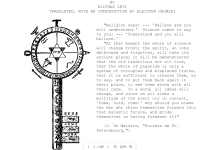
The Key of the Mysteries (Clef des grands mystères) is an esoteric book written by the French occultist and author Éliphas Lévi (born Alphonse Louis Constant), and later translated by Aleister Crowley. Key Themes and Contents • Culmination of Thought: The book represents the final summary of Lévi's philosophy on Western magic and the occult. • The Qabalah: It explores the secrets of the Rosicrucian interpretation of the Qabalah, describing occultism as a divine science or the "mathematics of God". • Dualism and Reconciliation: Lévi argues that the secrets of the world exist on a higher plane that can only be unlocked by reconciling the contradictions of reality's dualism. • Theology and Numbers: It features a sketch of the prophetic theology of numbers and the symbolism of the Hebrew alphabet. • Nature and Magic: The text covers spiritualism, fluidic phantoms, mesmerism, the astral world, and the Theory of the Will with its 22 axioms. • Dialogue of Faith, Science, and Reason: The work concludes with a dialogue where Reason acts as the reconciler between Faith and Science