
-
Hi guest! As you can see, the new Wizard Forums has been revived, and we are glad to have you visiting our site! However, it would be really helpful, both to you and us, if you registered on our website! Registering allows you to see all posts, and make posts yourself, which would be great if you could share your knowledge and opinions with us! You could also make posts to ask questions!
You are using an out of date browser. It may not display this or other websites correctly.
You should upgrade or use an alternative browser.
You should upgrade or use an alternative browser.
Who is ALLAH? The Sovereign of the Unseen and the Manifest
- Thread starter Angelkesfarl
- Start date
- Status
- Not open for further replies.
















- Joined
- Oct 1, 2023
- Messages
- 1,583
- Reaction score
- 3,646
- Awards
- 13
I'm not all that keen on purple or dark red on black either.We should start a poll and ask people if they find it more annoying if a member constantly uses ALL CAPS or huge fonts.






- Joined
- Nov 18, 2025
- Messages
- 502
- Reaction score
- 488
- Awards
- 7
"Simply remove it from the writing panel. In the mobile version, optimize the container's display to accommodate large fonts and ensure it automatically reformats them within the page. I will make sure to adjust the font size slightly in the future."
We should start a poll and ask people if they find it more annoying if a member constantly uses ALL CAPS or huge fonts.

- Joined
- Jan 18, 2025
- Messages
- 779
- Reaction score
- 5,893
- Awards
- 7
YouTube Video by Dr Neil Hamson[
Post automatically merged:
YouTube Video by Dr Neil Hamson[
Last edited:





- Joined
- Aug 22, 2024
- Messages
- 782
- Reaction score
- 2,344
- Awards
- 11
My eyes aren't either. Even not with my new glasses with those varifocus parts in it. (Computer screens are a pain in the ass for the most eyes anyway)I'm not all that keen on purple or dark red on black either.
- Joined
- Nov 18, 2025
- Messages
- 502
- Reaction score
- 488
- Awards
- 7
This is how men and mature friends act. You brought me Dr. Neil Hamson: his thinking is critical and scientific, and he wishes to speak only through historical evidence. I want the response to be against him.YouTube Video by Dr Neil Hamson[
Post automatically merged:
Then the man invented his first words: First: Analysis of the video's thesis Dr. Hamson claims that: The word "Allah" is not derived from the attribute "Al-Ilah" (The Deity), but is a proper name for an ancient pagan god that was part of a "Henotheism" (a pantheon of gods) and not "Monotheism" (oneness). Islam "redefined" this name and monopolized it, exactly as Judaism did with the name "Yahweh." Archaeological evidence (inscriptions) shows "Allah" alongside other gods such as "Al-Lat."
The first linguistic fallacy Dr. Neil Hamson claims in his first errors is that proper names mean nothing. This is a fatal scientific error from him; when he wants to present a theory, it was more appropriate for him to apply the rules of science with discipline when analyzing the Arabic language within its Semitic environment. The scientific fact, according to the majority of linguists like "Sibawayh" and "Al-Khalil," is that it is an abbreviation for the words "Al + Ilah" (The Deity), where the glottal stop (Hamza) was deleted due to frequent use. This was indeed as said anciently, but he forgot the meaning of archaeological research for the sake of building convictions based on personal whim. Let me demolish them as is my habit.
First, the linguistic root is "A-L-H," which is a shared root from the same linguistic base as Hebrew and its sister Arabic, and whoever followed the guidance of the tongues due to the proximity of locations in that vast region from Iraq to the borders of the Mediterranean in Syria, passing through Yemen. So let us dive in our time-travel suit to see the facts of history by history as he requests. First, what is the proper name defining the word God? The root (A-L-H) is a common root in Semitic languages: (Eloah) in Hebrew, and (Alaha) in Syriac Aramaic. These words mean "The Worshiped" or "God." Therefore, if we assume that Ishmael came as the son of Abraham to the Arabian Peninsula, according to the historical hypothesis, he would recognize the God his father Abraham already worshiped, especially since he "rebuilt the Kaaba for pilgrimage and raised its foundations that Adam established when he descended from the Garden of Eden"? Believe it or not, let us just continue our path; I am presenting the full linguistic hypothesis here, not the religious one. And let us assume an even more radical assumption: that neither Abraham nor Ishmael existed—what is his opinion and yours? We are freed from all weight; we return to history. We ride the carpet of thought and penetrate to the oldest of all, to Ancient Egypt, and we see.
We walk historically: contrary to the common belief that Akhenaten was the inventor of monotheism, funerary texts and prayers indicate the concept of the "One God" (NTR W`) from an early time:
A text from the "Book of the Dead" (Chapter 17): "I am the One God who created himself; I am the existence that has no beginning and no end."
The Great Hymn to the Aten says clearly: "O One God, like whom there is no other, You created the earth by Your will alone." This text dates back to approximately 1350 BCE, and it is a damning historical document of the existence of "pure monotheism" centuries before Islam and Christianity. We review the writings of Selim Hassan in the Encyclopedia of Ancient Egypt and also the research of Erik Hornung on monotheism.
Thus, we conclude that the idea of the One and Only God, the Creator of everything, existed before in the oldest archaeological texts that he wants. Did he mention that or think about it? Of course not, because he is presenting an selective viewpoint, so his mind will deceive him as he walks a path pre-prepared for him alone, prepared by his fertile and private imagination.
We take the Akkadian and Sumerian civilizations; we find a root he assumed but did not know well, and I know it well for him to understand: there is a very ancient root, "Anu." By reviewing historical texts and ancient Mesopotamian myths, "Anu" was the god of the heavens and the earth and the prime mover, "the first mind," the source, Ein Sof, the infinite God. After that, we find that humans began attributing to him sons and daughters, marrying them off, and inventing their own gods. If we put all the theories side by side, we will find a reference indicating monotheism in every one of those civilizations, linking them—review my article as a whole.
And we continue, let's go. The root (El) is originally Abrahamic Canaanite. Canaanite inscriptions say (El) is [the Creator of creatures and the father of mankind?]. We link the two roots easily now; we find that the meaning of the deity "Allah" is linguistically derived from the same Semitic root—though I have some reservations, I will continue with him so the article does not become longer for you than his thesis. This all indicates that there is a deep history among the Arabs themselves in venerating "One God" that was not polluted by the ideas of priests to impose taxes in the names of other gods. But I will not be drifted away; I will continue in his same way. (Note: do anyone’s eyes hurt from the light of truth? Wear protective glasses over your heart and continue with me).
Finally, (Dr. Neil Hamson) demolished his myth saying that inscriptions show Allah among other gods before Islam: the inscriptions of Jabal Hima and Duma (5th-6th century CE). The "Paleo-Arabic" inscriptions revealed decades before Islam the use by Arab Christians of the words "Allah," "Al-Ilah," and "Al-Rahman" to denote the One and Only God, some of them paired with the drawing of the "Cross," which proves that the word was used monotheistically centuries before the Quran?
Finally, because he is a Western scholar, he neglected poetry; it is, as they say, the Diwan of the Arabs and their history. We may not know exactly the moment or the archaeological event that determines when the name "Allah" was first said as a proper name for the One God, but we find that ancient Arabic inscriptions (such as Safaitic and Nabataean) used similar forms (such as "h-’lh") and evolved linguistically over the centuries. Therefore, any claim that it began as a "specific idol" is a guess not supported by a single material trace, as no "idol" or "statue" named "Allah" was ever found. The inscriptions of Al-Lat, Al-Uzza, Manat, Hubal, Isaf... etc., all have shapes and drawings, but Allah remained the only one never linked in any historical scientific reference to a single unique idol to say he was an idol being worshiped?
Welcome dear, you can put on some skin creams because the sun of truth is summery, and let us continue, O master of linguistic and archaeological remains. Labid bin Rabi'ah (Pre-Islamic): said his famous verse which the Prophet ﷺ approved: "Lo! Everything save Allah is void." This is an explicit recognition of the absolute sovereignty of Allah before Islam. Zuhair bin Abi Sulma: says in his Mu'allaqa: "Do not hide from Allah what is in your souls... to be concealed, for whatever is hidden, Allah knows it." Here we see the attribute of "Absolute Knowledge" attributed to Allah in the pre-Islamic consciousness.
The name Al-Rahman: Researchers found the name "Rhmanan" in inscriptions in the south of the Peninsula (Yemen) centuries before Islam, and it referred to the One God among the monotheists of the Arabs (Hanifs and Christians), which refutes the lie that the name is "invented" or "pagan." Rejection of the name "Al-Rahman": Historically, when the Treaty of Hudaybiyyah was written, Suhayl bin Amr refused to write "In the name of Allah, the Beneficent (Al-Rahman), the Merciful," saying: "As for Al-Rahman, by Allah we do not know what it is." This proves that the dispute was not over the existence of "Allah" (whom they knew), but over the unification of His attributes (Al-Rahman), which the polytheists saw as a name for another god or an attribute they did not accept.
Even though "Al-Rahman" as a proper name for the Deity himself refutes their argument in refusing to write with it, according to the Arabic poetry saying: "Has that girl struck her hybrid... has Al-Rahman my Lord severed her right hand" / and also Salamah bin Jandal al-Tahawi: "You hastened against us, our two hastenings against you... and what Al-Rahman wills, He binds and releases."
Thus we find that the name "Sharhab-il Yakkaf" appeared in a writing dated to the year "575" of the Himyarite calendar, corresponding to the year "460 CE." In the writing, the phrase appeared: "Rahmanan and his son Christ the Victorious," using the word "Krshsh" in exchange for the word Christus, indicating that its owner was a Christian. "Abraha" was titled in this text, as he was titled in the Marib Dam text, with the title that the kings of Yemen were titled with, which is: "King of Saba, Dhu Raydan, Hadramawt, Yamnat (Yemen) and its Arabs in the highlands (Tawdam), and in the lowlands (Tihamat)." He opened it with the phrase: "By the power of Rahmanan and His Messiah." Abraha had previously opened his text which he recorded on the "Marib Dam" with the phrase: "By the power and strength and mercy of Al-Rahman and His Messiah and the Holy Spirit." These two phrases are among the phrases that appear in the texts of Yemen for the first time, due to Abraha being a Christian, and Christianity in the days of the Ethiopian occupation of Yemen became an official religion of the government.
Meaning that Allah and His attributes were known and recognized anciently, older than his history, unique, having no idol worshiped nor anything mentioned. I conclude by thanking everyone; every scientific discussion illuminates the way for us and adds to, rather than subtracts from, our ability to expand ideas and analyze historical facts with a clear and correct scientific methodology.

- Joined
- Sep 9, 2023
- Messages
- 85
- Reaction score
- 262
- Awards
- 2
Well, that returns us to my original thesis here: Who is ALLAH? The Sovereign of the Unseen and the ManifestYouTube Video by Dr Neil Hamson[
Post automatically merged:
I honestly don't see a problem with Allah being used before Islam, it is explained in semantics - it's just a god, who became God. So, people worshipped many gods and were made to worship only one, so? Is Allah in Islam so insecure that it requires erasing all the "shameful" past? Is it even about faith? If Islam is superior to old beliefs, why fear them?
The problem with the past only exists when somebody wants to destroy history, erase people's memory - what is exactly being done by terrorists in radical Islam. They are responsible for destruction of many historical sites in Middle East and in Syria (and whatever they can get their hands on) - why? Because their masters need to "reboot" people's worldview, erase their memory, so it would be easier to radicaize them. Syria was the area in which many cultures and religions met, leaving rich historical legacy in monuments, many proofs of different religions and philosophies coexisting (or even existing which may be inconvenient, like other Arab cultures). Destroying this, imposing a single ideology on everyone is what they try to do there, and it's what Angelkesfarl was doing here, attacking every religion and faith with no regard to it's truth and value.
If presented with something better, people would naturally chose it over what they did in the past (excluding fanatics). Only when something new is not better, there is a problem with history and memory. When something worse needs to be accepted by people, it is necessary to leave them no choice, and so that they would not rebel it's useful to erase their memory. Is it what is happening here?
"Scripture is belief, not evidence." - basically, yes. It always amazes me how people try to prove scriptures. If the truth in a scripture is not self-evident, then any number of historical proof will not make it valid. If no history can back the scripture which is basically well and good - who cares if it's not ancient? Should we settle for ancient science, just because we can find many evidence of it being used before? Maybe continue memorising Aristotle's works because they are older than recent theories.
If someone had some beliefs in the past, which were tied to some events, and we find traces of these events, how does it prove the belief? Proving God like that is a huge leap. God isn't proven by the past, it can only be proven by subjective experience in concrete life circumstance. This is the "secret", you don't need to study manuscripts in some mountain fortress to figure out what God wants, you just ask Him and be attentive for how your life circumstances change. You do that in (true) magic, you do that in (true) religion.
Faith without deed is worthless, beliefs without decisions are hollow. But acting on faith and belief leads to experience. This is poison to erroneous beliefs. Reading scripture and never applying, reading occult tomes and never practicing - same thing. Talking with armchair practitioners after to pass the time and scratch the ego, your only reward. On the upside - no danger. If you don't count wasted life.
And the only thing achieved by having the same scripture memorised by many people is egregorial unity, which is a prerequisite for being subject to egregorial magic, not for religion and community with God. In other words, scriptures are only imposed by occult leaders who use them as leverage, and to cut people from direct communion with God. One of the reasons pictures of God are forbidden in Islam - as to not allow fake projections in worshippers psyche being used by Iblis or magicians. But no amount of rules can ensure correct practice. But when someone is trying to prove scripture with history, they are taking the question away from "Is the scripture true spiritually and sociologically?" to "Is the scripture true because God wills it as proven by those events" - this is NOT the correct proof. Circumstantial evidence. Interpretation of those is subjective, not objective.
Post automatically merged:
Using bold text also makes your arguments thicker, more solid and weighty I suppose. Almost feels like the weight of Moses tablet in there... Must be the truth then.My eyes aren't either. Even not with my new glasses with those varifocus parts in it. (Computer screens are a pain in the ass for the most eyes anyway)



- Joined
- Jul 5, 2024
- Messages
- 2,114
- Reaction score
- 4,606
- Awards
- 20
You are referring here to Akhenaten, A Pharaoh, who invented monotheism of Sun God, slowly removing other gods so he himself would be an incarnation of that god. This religion none before him in Egypt followed and it died out not too long after him. (I assume that his interests were far from being an honest devotee of a god)The Great Hymn to the Aten says clearly: "O One God, like whom there is no other, You created the earth by Your will alone." This text dates back to approximately 1350 BCE, and it is a damning historical document of the existence of "pure monotheism" centuries before Islam and Christianity. We review the writings of Selim Hassan in the Encyclopedia of Ancient Egypt and also the research of Erik Hornung on monotheism.
The oldest Egyptian texts we have seem to be about 1 000 years older that this Pharaoh and he is the oldest monotheist, so his work is hardly among the earliest texts. 1 000 years is a long time.
- Joined
- Nov 18, 2025
- Messages
- 502
- Reaction score
- 488
- Awards
- 7
Archaeological expert Dr. Abdel Rahim Rihan, Director General of Archaeological Research and Studies at the Ministry of Tourism and Antiquities, presents the features of this study, clarifying that the Book of the Dead contains approximately two hundred papyri, reaching a length of 17.40 meters, dating back to the period between 594 – 588 BC.A text from the "Book of the Dead" (Chapter 17): "I am the One God who created himself; I am the existence that has no beginning and no end."
The texts in this book consist of Egyptian magical prayers, invocations, litanies, and talismans accompanied by illustrations. These texts have reached us inscribed on leather, shrouds, coffins, tomb and temple walls, and papyrus. Initially, these texts were called the "Gospel of the Egyptians," but the common name now is the "Book of the Dead," a term coined by Lepsius. The ancient Egyptians called it "Pert em Heru," meaning "The Coming Forth by Day." The texts were written in simple Hieroglyphic and Hieratic scripts, while the grammatical language is "Middle Egyptian," with each chapter heading written in red ink.
Dr. Rihan points out that the Book of the Dead proves the ancient Egyptian's monotheism and their belief in One God, asserting that Egyptian civilization was not pagan or polytheistic in worship, despite the conflicting ideas regarding the number of deities—ranging from 2,800 to 1,250. Ancient Egyptians realized there was only One God, and the civilization was built on the principle of Monotheism.
He indicates that the Book of the Dead is the most famous monotheistic book in Egyptian civilization, containing definitive phrases indicating the Oneness of the Creator, such as: "You are the First and before You there is nothing; You are the Last and after You there is nothing," and another sentence on the tongue of the One God saying: "I created everything alone and no one was beside me."
I believe, my friend, this is sufficient for you to realize the vast historical difference—that Monotheism is not an Abrahamic claim but a reality fought in every age by its enemies or those who benefit from its absence. As for forcing people to embrace a religion, this is pure cognitive nonsense. If we say someone destroyed things because they were a "terrorist" and all this delirium, let us review the actions of pagans in destroying the temples of fallen states and erasing cultures without their followers batting an eye. Today, Muslims number nearly 2.5 billion; did anyone force them? Even in America itself, was anyone forced to convert? Does it make sense to describe 2.5 billion people as terrorists just to enjoy hating individuals? Have you ever in your life met a Muslim who forced someone to follow their religion? Monotheism is the historical origin, not the opposite.
Defenders may defend their paganism, which I will not be dragged into attacking. However, let me bring you a text from Akhenaten’s papyri, presented by the esteemed member Morell:
"The temples of the gods fallen to ruin, their bodies do not endure. Since the time of the ancestors, it is the wise man that knows these things. Behold, I, the king, am speaking so that I might inform you concerning the appearances of the gods. I know their temples, and I am versed in the writings, specifically, the inventory of their primeval bodies. And I have watched as they [the gods] have ceased their appearances, one after the other. All of them have stopped, except the god who gave birth to himself. And no one knows the mystery of how he performs his tasks. This god goes where he pleases and no one else knows his going. I approach him, the things which he has made. How exalted they are."
Here, we were supposed to say that Allah, the "Lord of the Worlds," is pure Monotheism for worship, and God was never among other gods as haters claim. I asked: Have we found a single idol named "Allah"? But as usual, the pretenders flee when the light of truth comes, resorting to twisting facts and labeling to evade their failure in confrontation. He who said yesterday the name is "linguistic" and consulted his teacher is silent today after I refuted his weak argument, which I do not believe came from an academic's mouth but from his mind and intertwined assumptions, claiming to understand Arabic more than its native speakers.
But since God is mentioned in multiple languages, and because He is the God of the universe, the heavens, and the earth, what is the difference? I say the difference is that the existence of One God will erase any other god. This truth I believe in does not mean imposing it on you, and likewise, you should not impose your paganism on me—otherwise, who would be the imposer and the fanatic? Insults and labeling are tools from a quiver empty of arrows. In Arabic we say: "Do not wail like women," but be a man.
If we look with an insightful eye at various civilizations, we will find a very important glimpse of Akhenaten's words remaining: all their temples were demolished. Perhaps it raises a question: Who are those gods who allow their temples to be destroyed, their worship to vanish, and their mention to be forgotten? Looking at the word "The God" (Al-Ilah), we find it exactly as Morell's signature: His life is without beginning and without end, because a beginning needs a maker to start it, and an end needs the same maker to finish it.
Therefore, how long will I remain restricted here just for presenting my viewpoint, which I have not forced upon anyone? Why should I be restricted or pressured just because I say, "I believe in One God"? What provokes the rest? A short time ago, a young man killed nine unarmed people and he was not a Muslim; did Muslims label anyone as a terrorist or their religion as a religion of terror? Every day, infants are killed in Gaza who know nothing but their mothers' milk; did Muslims label Judaism as a religion of terror or reject it? Once again, have you ever heard a Muslim insult Jesus, Mary, or Moses? The capacity for contempt and insults always comes from pagans or non-religious people. They hurl accusations and revolve in the orbits of wordplay only to escape. Are there any real scientific or academic confrontations? No, just launching theories without any proof.
One last question: Does any pagan possess evidence that the god they worship is solely the one who created the sun?
Thank you for your patience.



- Joined
- Sep 27, 2021
- Messages
- 3,000
- Reaction score
- 9,251
- Awards
- 36
This comes to mindwas anyone forced to convert?
- Joined
- Jul 5, 2024
- Messages
- 2,114
- Reaction score
- 4,606
- Awards
- 20
What an inconvinient argument. You quote book of the dead. Which one? There are hundreds of versions, if not many thousands, that change greatly through the history of ancient Egypt. Also where is the quote taken from? What god is praised? Taking the quote out of the context of the text is easy way to make it say what you want it to say.Archaeological expert Dr. Abdel Rahim Rihan, Director General of Archaeological Research and Studies at the Ministry of Tourism and Antiquities, presents the features of this study, clarifying that the Book of the Dead contains approximately two hundred papyri, reaching a length of 17.40 meters, dating back to the period between 594 – 588 BC.
The texts in this book consist of Egyptian magical prayers, invocations, litanies, and talismans accompanied by illustrations. These texts have reached us inscribed on leather, shrouds, coffins, tomb and temple walls, and papyrus. Initially, these texts were called the "Gospel of the Egyptians," but the common name now is the "Book of the Dead," a term coined by Lepsius. The ancient Egyptians called it "Pert em Heru," meaning "The Coming Forth by Day." The texts were written in simple Hieroglyphic and Hieratic scripts, while the grammatical language is "Middle Egyptian," with each chapter heading written in red ink.
Dr. Rihan points out that the Book of the Dead proves the ancient Egyptian's monotheism and their belief in One God, asserting that Egyptian civilization was not pagan or polytheistic in worship, despite the conflicting ideas regarding the number of deities—ranging from 2,800 to 1,250. Ancient Egyptians realized there was only One God, and the civilization was built on the principle of Monotheism.
He indicates that the Book of the Dead is the most famous monotheistic book in Egyptian civilization, containing definitive phrases indicating the Oneness of the Creator, such as: "You are the First and before You there is nothing; You are the Last and after You there is nothing," and another sentence on the tongue of the One God saying: "I created everything alone and no one was beside me."
I believe, my friend, this is sufficient for you to realize the vast historical difference—that Monotheism is not an Abrahamic claim but a reality fought in every age by its enemies or those who benefit from its absence. As for forcing people to embrace a religion, this is pure cognitive nonsense. If we say someone destroyed things because they were a "terrorist" and all this delirium, let us review the actions of pagans in destroying the temples of fallen states and erasing cultures without their followers batting an eye. Today, Muslims number nearly 2.5 billion; did anyone force them? Even in America itself, was anyone forced to convert? Does it make sense to describe 2.5 billion people as terrorists just to enjoy hating individuals? Have you ever in your life met a Muslim who forced someone to follow their religion? Monotheism is the historical origin, not the opposite.
Defenders may defend their paganism, which I will not be dragged into attacking. However, let me bring you a text from Akhenaten’s papyri, presented by the esteemed member Morell:
"The temples of the gods fallen to ruin, their bodies do not endure. Since the time of the ancestors, it is the wise man that knows these things. Behold, I, the king, am speaking so that I might inform you concerning the appearances of the gods. I know their temples, and I am versed in the writings, specifically, the inventory of their primeval bodies. And I have watched as they [the gods] have ceased their appearances, one after the other. All of them have stopped, except the god who gave birth to himself. And no one knows the mystery of how he performs his tasks. This god goes where he pleases and no one else knows his going. I approach him, the things which he has made. How exalted they are."
Here, we were supposed to say that Allah, the "Lord of the Worlds," is pure Monotheism for worship, and God was never among other gods as haters claim. I asked: Have we found a single idol named "Allah"? But as usual, the pretenders flee when the light of truth comes, resorting to twisting facts and labeling to evade their failure in confrontation. He who said yesterday the name is "linguistic" and consulted his teacher is silent today after I refuted his weak argument, which I do not believe came from an academic's mouth but from his mind and intertwined assumptions, claiming to understand Arabic more than its native speakers.
But since God is mentioned in multiple languages, and because He is the God of the universe, the heavens, and the earth, what is the difference? I say the difference is that the existence of One God will erase any other god. This truth I believe in does not mean imposing it on you, and likewise, you should not impose your paganism on me—otherwise, who would be the imposer and the fanatic? Insults and labeling are tools from a quiver empty of arrows. In Arabic we say: "Do not wail like women," but be a man.
If we look with an insightful eye at various civilizations, we will find a very important glimpse of Akhenaten's words remaining: all their temples were demolished. Perhaps it raises a question: Who are those gods who allow their temples to be destroyed, their worship to vanish, and their mention to be forgotten? Looking at the word "The God" (Al-Ilah), we find it exactly as Morell's signature: His life is without beginning and without end, because a beginning needs a maker to start it, and an end needs the same maker to finish it.
Therefore, how long will I remain restricted here just for presenting my viewpoint, which I have not forced upon anyone? Why should I be restricted or pressured just because I say, "I believe in One God"? What provokes the rest? A short time ago, a young man killed nine unarmed people and he was not a Muslim; did Muslims label anyone as a terrorist or their religion as a religion of terror? Every day, infants are killed in Gaza who know nothing but their mothers' milk; did Muslims label Judaism as a religion of terror or reject it? Once again, have you ever heard a Muslim insult Jesus, Mary, or Moses? The capacity for contempt and insults always comes from pagans or non-religious people. They hurl accusations and revolve in the orbits of wordplay only to escape. Are there any real scientific or academic confrontations? No, just launching theories without any proof.
One last question: Does any pagan possess evidence that the god they worship is solely the one who created the sun?
Thank you for your patience.
Claiming a country to be monotheistic when we know over 1500 deities that were mentioned by name and many of those were worshiped is not convincing either.
Even I with my weak knowledge know 2 gods of Sun, Ra and Horus, but I bet that there are more. You might be good in understanding Islam, but the fact of ancient egypt being polytheistic is too well known, too well documented and I would dare to say the most elementary knowledge of history.
- Joined
- Sep 9, 2023
- Messages
- 85
- Reaction score
- 262
- Awards
- 2
After the history is wiped out, it's possible to tell people fables about how they were converted peacefully, or even better, that previously there was no culture - then some prophet came and people rejoiced, seen the light, and built civilisation. That was done with Russia with some 6500 years of previous history snipped (baptised about 988 AC, before calendar reforms Russia counted years from the "creation of the world," an event placed in 5509 B.C.) - no, there was no pre-Christian cvilisiation there, you were feral, ran around the woods naked, you didn't have alphabet, etc.
It's obvious there are efforts to erase history and rewrite it everywhere, in Middle East it's done by radical Islamists (because they hide under the banner of Islam).
And we all know mythologies, right? Well, a practitoner who works with spirits, gods, can tell you that mythologies lie. They too were efforts to introduce new order by killing old gods and making them look bad. History is written by the victor is an old maxim.
- Joined
- Jul 5, 2024
- Messages
- 2,114
- Reaction score
- 4,606
- Awards
- 20
Maybe this is his version of Osiris myth?
Allah(Osiris) was murdered by Allah(Set), mourned by Allah(Isis, his wife), who searched for burried body of Allah(Osiris) collected parts together. Then Allah (Isis) concieved a baby Allah(horus) with dead Allah(Osiris). Once Allah(Horus) grew up, he challenged Allah (Set) for the thorne and defeated him.
I agree with @BBBB about history earsing. Earsing and rewritting history is comon political tactic.
Allah(Osiris) was murdered by Allah(Set), mourned by Allah(Isis, his wife), who searched for burried body of Allah(Osiris) collected parts together. Then Allah (Isis) concieved a baby Allah(horus) with dead Allah(Osiris). Once Allah(Horus) grew up, he challenged Allah (Set) for the thorne and defeated him.
I agree with @BBBB about history earsing. Earsing and rewritting history is comon political tactic.
- Joined
- Nov 18, 2025
- Messages
- 502
- Reaction score
- 488
- Awards
- 7
First of all, even Wikipedia did not mention massacres. If we wanted to diverge from the main discussion, we would say that Muslims did not massacre or coerce people; rather, it was a conquest following fierce wars with the Byzantines. These wars exhausted the military power of the Sasanian state, which had already initiated aggression against Al-Nu'man ibn al-Mundhir and harassed the Arabs.
Also, there is an idea perhaps deliberately overlooked in history: Muslims used to invite nations to enter under the banner of Islam or, at the very least, to allow Muslims religious freedom. This was met with severity, torture, killing, harassment, and wars. Consequently, it is natural that the stronger side imposes its hegemony—this is a human matter in which the oneness or non-oneness of the Deity has no hand. Look at what pagans did, such as Hulagu in his massacres, or even the cleansing of Native Americans in America. It is not like that; rather, Muslims never, in the history of Islam, carried out movements of crushing, torturing, or killing. On the contrary, the text links the Islamic conquest with the movement of "Great Urbanization," where million-sized metropolises (by the standards of that era) such as Merv and Nishapur arose, transforming Iran from a feudal, Dehqan-based society into an urban commercial society.
Here, the matter is that the Jizya is paid—which, by the admission of the article itself, was less than the Sasanian taxes—and it is waived as soon as you enter Islam voluntarily. So, things are different here. I did not intend to merely defend matters; I wanted to dismantle them in a discussion that I hope is driven by calmness and pure dialogue, not mere polemics.
And does this prevent the existence of the Oneness of the Deity? Why are we always dragged into a conflict that claims Muslims are terrorists? We did not say Americans are terrorists because they entered the Vietnam War, or because they exterminated Muslims in Iraq. If I wanted to drown the subject in controversy, I would bring testimonies from the heart of the army officers themselves, witnessing horrors that make the human forehead sweat with shame. Muslims did not do 1% of that; rather, they developed, modernized, interacted, and in the heart of Islam itself, when Jerusalem was opened, Umar ibn al-Khattab refused to pray in the church so that no one after him would use his prayer as a pretext to seize it from the hands of the Christians.
I do not want us to enter into side arguments and leave the core: Does Monotheism exist or not? I responded to the man's idea and dismantled his argument, and I asked my question: Has an idol ever been found, in the entirety of human history, that is called or attributed to the name of "Allah"? Of course, I will not find an answer because, simply, there is no such evidence to support any argument for that.
As for the Ancient Egyptians having pluralism, I did not deny it at all; rather, I said that Monotheism existed because of the presence of a Supreme Creator God. In the field of research, I said there are theories that say this, and I presented a professor of Ancient Egyptian language and Egyptian archaeologists who refuted those same arguments with other proofs. Meaning, these are theories that might be overturned in the future, but the texts are clear and decisive regarding the existence of the idea of Monotheism since humanity was created, and that it is not new to human thought as some promote without any evidence.
My friend mentioned a god who kills another god, marries, dies, and lives, but he did not answer me frankly: Which god created the sun? The age of the Earth is approximately 4.5 billion years. The age of the universe is approximately 28 billion years. Where were those gods that we only heard about in the span of 7,000 years at most? Where was Odin? Where was Ra? Where was whoever it was? All of them are human ideas, but Monotheism is the actual truth that I believe in. Do I force it upon you? No, I did not force it upon you.
And would the forum administration allow me to respond in the same impolite manner as some members respond? Should I intentionally insult their deities and describe their greats, philosophers, and priests with the most despicably low charges, as we would find if we reviewed the topic? Even if allowed, I cannot allow myself to slide into the abyss of hatred and justify hatred merely because of a doctrinal or intellectual difference between me and a member. Rise up, for the bottom is crowded.
I came with an open heart, not to preach, but to demonstrate a complete Eastern spiritual outlook that will not be straightened without knowing the intellectual and doctrinal origins of the proponents of that idea, and then reaching practical results for it. Unfortunately, I do not like engaging in side conflicts away from the main text or the topic of discussion or its definitions, as the administration warned in the forum rules, which I respect even if they are used with noticeable arbitrariness against me at least. But it is an arbitrariness I forgive because I am new and my thought is different, and I am used to the fact that in the beginning, caution and suspicion will prevail until, over time, the soundness of intentions becomes clear to everyone, and "the water returns to its streams once again," as we say in one of the folk proverbs: "Love may come after enmity."
I know there is a current that has become clear to me in the forum, pagan or what is called "Wicca," and it is a current that has suffered much throughout modern history until it was recognized. But it is not the only current here in the forum; so I hope its followers possess a flexibility that allows them to accept the "Other." I say that my belief is a definitive truth to me, like the sun in the middle of the sky. And you say, "Rather, my belief is the correct one." Fine, let us see without conflict, and let each of us display his arguments.
However, we are in a sub-section about religions in the forum, and in its basic definition, Islam is written as a freedom to create topics in it—definitional and discussional. But I did not see that it is the right of those who do not believe in a person's thought and belief to stab at the intentions of the other and hurl accusations at them randomly, and he has no right to respond? I do not think I read that in the community guidelines note of the forum, nor do I think it is a behavior supported by the administration; rather, it is the behavior of the members. I will accept criticism, but within the limits of etiquette in its presentation. Say what you wish, but within the limits of not encroaching on the freedom of the other. I believe this is among the charters of Western thought and the requirements of Western freedom that the television blares day and night. Will I see it in reality soon?
My invitation to everyone: review my words since the day I entered—and fortunately, I do not even have the freedom to erase or even improve them—and tell me: when did I attack the honor of a god or a deity or a thinker or a priest or a member, or doubt their behavior or principles, or diminish their respect? Rise up, for the bottom is crowded.
Also, there is an idea perhaps deliberately overlooked in history: Muslims used to invite nations to enter under the banner of Islam or, at the very least, to allow Muslims religious freedom. This was met with severity, torture, killing, harassment, and wars. Consequently, it is natural that the stronger side imposes its hegemony—this is a human matter in which the oneness or non-oneness of the Deity has no hand. Look at what pagans did, such as Hulagu in his massacres, or even the cleansing of Native Americans in America. It is not like that; rather, Muslims never, in the history of Islam, carried out movements of crushing, torturing, or killing. On the contrary, the text links the Islamic conquest with the movement of "Great Urbanization," where million-sized metropolises (by the standards of that era) such as Merv and Nishapur arose, transforming Iran from a feudal, Dehqan-based society into an urban commercial society.
Here, the matter is that the Jizya is paid—which, by the admission of the article itself, was less than the Sasanian taxes—and it is waived as soon as you enter Islam voluntarily. So, things are different here. I did not intend to merely defend matters; I wanted to dismantle them in a discussion that I hope is driven by calmness and pure dialogue, not mere polemics.
And does this prevent the existence of the Oneness of the Deity? Why are we always dragged into a conflict that claims Muslims are terrorists? We did not say Americans are terrorists because they entered the Vietnam War, or because they exterminated Muslims in Iraq. If I wanted to drown the subject in controversy, I would bring testimonies from the heart of the army officers themselves, witnessing horrors that make the human forehead sweat with shame. Muslims did not do 1% of that; rather, they developed, modernized, interacted, and in the heart of Islam itself, when Jerusalem was opened, Umar ibn al-Khattab refused to pray in the church so that no one after him would use his prayer as a pretext to seize it from the hands of the Christians.
I do not want us to enter into side arguments and leave the core: Does Monotheism exist or not? I responded to the man's idea and dismantled his argument, and I asked my question: Has an idol ever been found, in the entirety of human history, that is called or attributed to the name of "Allah"? Of course, I will not find an answer because, simply, there is no such evidence to support any argument for that.
As for the Ancient Egyptians having pluralism, I did not deny it at all; rather, I said that Monotheism existed because of the presence of a Supreme Creator God. In the field of research, I said there are theories that say this, and I presented a professor of Ancient Egyptian language and Egyptian archaeologists who refuted those same arguments with other proofs. Meaning, these are theories that might be overturned in the future, but the texts are clear and decisive regarding the existence of the idea of Monotheism since humanity was created, and that it is not new to human thought as some promote without any evidence.
My friend mentioned a god who kills another god, marries, dies, and lives, but he did not answer me frankly: Which god created the sun? The age of the Earth is approximately 4.5 billion years. The age of the universe is approximately 28 billion years. Where were those gods that we only heard about in the span of 7,000 years at most? Where was Odin? Where was Ra? Where was whoever it was? All of them are human ideas, but Monotheism is the actual truth that I believe in. Do I force it upon you? No, I did not force it upon you.
And would the forum administration allow me to respond in the same impolite manner as some members respond? Should I intentionally insult their deities and describe their greats, philosophers, and priests with the most despicably low charges, as we would find if we reviewed the topic? Even if allowed, I cannot allow myself to slide into the abyss of hatred and justify hatred merely because of a doctrinal or intellectual difference between me and a member. Rise up, for the bottom is crowded.
I came with an open heart, not to preach, but to demonstrate a complete Eastern spiritual outlook that will not be straightened without knowing the intellectual and doctrinal origins of the proponents of that idea, and then reaching practical results for it. Unfortunately, I do not like engaging in side conflicts away from the main text or the topic of discussion or its definitions, as the administration warned in the forum rules, which I respect even if they are used with noticeable arbitrariness against me at least. But it is an arbitrariness I forgive because I am new and my thought is different, and I am used to the fact that in the beginning, caution and suspicion will prevail until, over time, the soundness of intentions becomes clear to everyone, and "the water returns to its streams once again," as we say in one of the folk proverbs: "Love may come after enmity."
I know there is a current that has become clear to me in the forum, pagan or what is called "Wicca," and it is a current that has suffered much throughout modern history until it was recognized. But it is not the only current here in the forum; so I hope its followers possess a flexibility that allows them to accept the "Other." I say that my belief is a definitive truth to me, like the sun in the middle of the sky. And you say, "Rather, my belief is the correct one." Fine, let us see without conflict, and let each of us display his arguments.
However, we are in a sub-section about religions in the forum, and in its basic definition, Islam is written as a freedom to create topics in it—definitional and discussional. But I did not see that it is the right of those who do not believe in a person's thought and belief to stab at the intentions of the other and hurl accusations at them randomly, and he has no right to respond? I do not think I read that in the community guidelines note of the forum, nor do I think it is a behavior supported by the administration; rather, it is the behavior of the members. I will accept criticism, but within the limits of etiquette in its presentation. Say what you wish, but within the limits of not encroaching on the freedom of the other. I believe this is among the charters of Western thought and the requirements of Western freedom that the television blares day and night. Will I see it in reality soon?
My invitation to everyone: review my words since the day I entered—and fortunately, I do not even have the freedom to erase or even improve them—and tell me: when did I attack the honor of a god or a deity or a thinker or a priest or a member, or doubt their behavior or principles, or diminish their respect? Rise up, for the bottom is crowded.

- Joined
- Jan 2, 2026
- Messages
- 356
- Reaction score
- 317
- Awards
- 4
If I'm not mistaken from my general understanding that is kind of what Hinduism believes.
From my quick searches through that religion since I became briefly interested in it I found that Hinduism believes that even the gods are all manifestions of Braham.
So instead of Allah it would be Braham and instead of the Egyptian gods it would be the Hindu Pantheon. Atleast thats how I interpret from my brief readings of it.
But if someone more familiar with Hindu teachings can correct me if I'm wrong.
From my quick searches through that religion since I became briefly interested in it I found that Hinduism believes that even the gods are all manifestions of Braham.
So instead of Allah it would be Braham and instead of the Egyptian gods it would be the Hindu Pantheon. Atleast thats how I interpret from my brief readings of it.
But if someone more familiar with Hindu teachings can correct me if I'm wrong.
Post automatically merged:
Meant this message by the way. New to forums so forgot to quote it.Maybe this is his version of Osiris myth?
Allah(Osiris) was murdered by Allah(Set), mourned by Allah(Isis, his wife), who searched for burried body of Allah(Osiris) collected parts together. Then Allah (Isis) concieved a baby Allah(horus) with dead Allah(Osiris). Once Allah(Horus) grew up, he challenged Allah (Set) for the thorne and defeated him.
I agree with @BBBB about history earsing. Earsing and rewritting history is comon political tactic.
Last edited:
- Joined
- Sep 27, 2021
- Messages
- 3,000
- Reaction score
- 9,251
- Awards
- 36
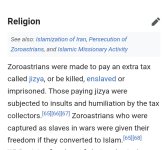
First of all, even Wikipedia did not mention massacres. If we wanted to diverge from the main discussion, we would say that Muslims did not massacre or coerce people
- Joined
- Aug 22, 2024
- Messages
- 782
- Reaction score
- 2,344
- Awards
- 11
Indeed...And they were tortured too, women were raped in large numbers. while the Islamization happened. This last thing breaks in a lot of cases for a native population the will/stamina to survive in particular when at the same time the men are enslaved and it is a pretty quick way to water down the native bloodlines.... Yes there can be beautiful things in Islam, but there are an awful lot of people murdered, tortured, raped, imprisoned and enslaved in name of Allah. (yes, in name of Christ too, I can't and won't deny that, here in Europe we had our history too)
Overall, the discussion should not be whether it is happened or not. It happened and we have to live with it. The discussion should be how it adds to the egregore of Allah, how this deforms a egregore. (And with this we are kind of back on topic)
- Joined
- Jul 5, 2024
- Messages
- 2,114
- Reaction score
- 4,606
- Awards
- 20
Bull's eye.If I'm not mistaken from my general understanding that is kind of what Hinduism believes.
From my quick searches through that religion since I became briefly interested in it I found that Hinduism believes that even the gods are all manifestions of Braham.
So instead of Allah it would be Braham and instead of the Egyptian gods it would be the Hindu Pantheon. Atleast thats how I interpret from my brief readings of it.
But if someone more familiar with Hindu teachings can correct me if I'm wrong.
Post automatically merged:
Meant this message by the way. New to forums so forgot to quote it.
Yes, you are right. Though in Hinduism it's about politics among people. This doctrine doesn't really work when you go deep. How many of the people worship and note that they worship one universal god? They prefer their specific god and acknowledge other separated gods... There are three main gods in Hinduism, with many many lesser ones, if I'm right... But it keeps people at peace. It's very elegant way to prevent people to fight each other over religion. I won't deny that it seems to be effective.
Good thought... I think that this was not implemented in Ancient Egypt where the Pharaoh was also a high priest, if I remember correct. Pharaohs were choosing their worshiped deity, when they follower different god that the one before them, it was brutal change often. Damaged and even ruined temples, people murdered. Mainly in the capital and in the cities The country was vast, so there was always place for more gods, but various forms of worship had it hard to co-exist... again because of money and other offerings people were bringing into the temples.
The religious law @Angelkesfarl notes, Unfortunately it was very advantageous for Muslims. Truth is that there were some very good and human Muslim leaders, under who it was very good and peaceful life, but judging by observing the world even today, they were probably ones who did not really follow this doctrine. I watched one cool Muslim scholar on YT, who just honestly admitted that Islamic extremist are true when they say that they follow Islamic law... can't find him now. Hope he's not dead because of it.
Asking which God made Sun is asking unanswerable question. No god left a sign of their authorship on the sun. No God left their fingerprints on it. Astrologers are observing births of starts through their telescopes even nowadays and they see no gods making them either. Not even the one you worship.
- Joined
- Nov 18, 2025
- Messages
- 502
- Reaction score
- 488
- Awards
- 7
The Translation
"I have truly enjoyed the recent interventions, and despite our differing perspectives, the dialogue has remained elevated. Thank you for this cognitive refinement; it is truly heartening. As a brother to everyone in humanity, I share with you my knowledge, and as a friend to all, I share the burden of research. I summarize by asking: Are we searching history for the shadows of the lamp while forgetting that it stands before us illuminating?
To the Honorable Moderator who is angry with me: I mentioned in another thread that the owner of the house, out of his generosity, tolerates his guest. So, will you tolerate me? It seems, as we say in our culture, 'Patience has its limits, my dear' (quoting a famous song).
My friend Morell, do telescopes see the mathematical and physical laws behind the life and death of stars? Shall we subject the Divine to the limited boundaries of modern science? Science may evolve to see what we, as humans incapable of encompassing all the laws and dimensions of the universe, cannot yet perceive. All our scientists agree that we see only a small fraction of the observable universe and not what lies beyond it. Shall we settle for mere theories? Do you not sometimes feel that searching for 'fingerprints' of the Creator in matter is like searching for the 'author' within the atoms of ink in his book? The 'God' I speak of is not an adversary of science, but its Originator. He is the one who granted us the entire universe and left us as His vicegerents within it by His will and under His guardianship, because as you can see, we are smaller than the management of the universe. Can all the powers and sciences of humanity manage the cosmos? I believe we are the ones who need Him, not He who needs us.
When I cited the Egyptian papyri, my goal was not to impose a 'creed,' but to draw your attention as friends to the fact that our early ancestors, in a moment of mental clarity, realized that 'Monotheism' is the truth that precedes all religions and wars. Political disputes and the Jizya are 'human noise,' while the 'Oneness of the Creator' is the majestic truth that precedes everything.
Ohana and AlfrunGrima, you touched upon a profound point regarding 'Hinduism' and the 'Egregore.' As humans, we tend to personify unseen powers to understand them, and this is what created 'apparent multiplicity.' But let us reflect together as brothers: Is 'The Source' affected if people misdescribe it? 'Allah' is far beyond being a mere 'collective energy' (Egregore) distorted by human actions. He is 'The Constant' in a world of 'Variables.' What we see of blood in history is a 'distortion in the human mirror' and not in 'The Divine Face.'
My fellow seekers, I did not come here to triumph over you in an argument, but I wanted to say: let us shatter the slavery of books and look—as a young American Westerner among you looked at the Quran—without prior political beliefs. 'Monotheism' is not a political system imposed by swords; it is the 'Fitra' (innate nature) that calls you from within, which you ignore by escaping into debates about Jizya and wars. History is the act of stumbling humans, while 'Monotheism' is the act of the Eternal God.
'Which God created the sun?' I answered you through the Egyptian papyri where the One says: 'I created everything alone and no one was beside me.' You demand material proof of the Originator of matter. In Islam, there is part of a verse that says, 'There is no compulsion in religion.' The Jizya existed because men did not join the Muslim armies—it was a payment in lieu of military service, and also for the system of protection and the state for which taxes are paid. In ancient times, power had its rules, and today it has the same political, not religious, rules.
I will leave all this aside and say that Islam, as a religion, came with simple words stating it is a universal faith urging everyone towards righteousness and peace. It strictly forbids any incitement to killing; indeed, there are verses warning Muslims and even the Prophet himself that any deviation from God's commands in preserving human souls and forbidding killing or corruption on earth would result in Divine punishment even for the most devoted (I mention this for your research, not asking for submission). He defines Himself in a verse that translates what is in Judaism, saying: 'O Moses, I am Allah, the Lord of the Worlds.' Note the word Adonai translates as Lord? And the opening of the Torah: 'I am Yahweh your God.' In Christianity, by the admission of Christ himself in multiple recognized versions: 'My God created everything.'
What I am saying here in a magick forum, by the way, is that there is a God who created everything from nothing and perfected its measure. He made us vicegerents on earth, meaning we succeed one another in the dominion of the planet. Apply the verses: there is no mover on earth nor a master for it since the dawn of humanity until today except humans. They slaughter slaves in the East and West and throw them into the sea. In Islam, Christianity, and Judaism, the same texts recur about loving your neighbor, being kind to the sinner, and having mercy as a human towards other creatures. So where are the books, texts, and teachings of the pagans, and where is their miraculous application on earth?
Finally, the same book, the Quran, says the people of the earth will not all submit, nor will they all follow Islam. This is a challenge to humanity: could we all submit as humans for one second and shatter Islam? It will not happen. Therefore, the Creator God, the Knower of the Unseen and the Manifest, with whom I began my topic, has praises, prayers, and names that in their essence manifest, translate, clarify, and reveal any confusion in a name, a theological narrative, a Greek one, or even from the Grimorium Verum. If we deny Him as God, should we throw the magick circles for protection behind our backs? Should we delete the names of the ranks, the adjurations, and the banishments from the books? Should we deny the Shem HaMephorash and throw it into the sea along with its angels? And let us not forget the 72 demons. Should we deny and throw Lucifer and Satan behind our backs and declare that nothing exists, and that it is all—as many have said—mere manifestations of the 'Ego' in the mind of the conscious person, a summoning of primitive psychological forces... blah blah blah of the written nonsense in many books, even by the most famous magicians of previous centuries like Aleister Crowley?
I will go back and say: in my view, the demons are incarnated among you, and I suspect they are present, refuting their own thought and exposing their falsehood—that they were merely manipulators of truth for the sake of 'sovereignty over the herd.' It was not I who did this, but they. I presented the 'Grand Secret' of the square of the Creator's Name, which indicates His attribute: 'Al-Hafiz' (The Protector/Preserver), for the preservation of the self and things. Has anyone reflected on it, even though it is from the heart of Shams al-Ma'arif? Bathe, purify yourself, and say: 'I believe in the One and Only God,' and say at the beginning of the presence: 'Shema Yisrael, Adonai Eloheinu, Adonai Echad.' The Infinite Ein Sof is 'Visions perceive Him not, but He perceives all visions,' 'There is nothing like unto Him.' In Islam, an explanation of a verse in Surah Al-Hadid is where God defines Himself: 'He is the First and there is nothing before Him, He is the Last and there is nothing after Him, He is the Manifest and there is nothing above Him, He is the Hidden and there is nothing beyond Him.' God defines Himself as having a Throne above a Chair in a rhetorical metaphor, not a physical form, and that the Throne has four angels carrying its corners. If you want, there are thousands of videos explaining the amount of scientific facts about the expansion of the universe, and how the human form from the moment of conception to birth scientifically matches the same descriptions before the invention of the microscope.
Here, I am not preaching to you, for we are not in a place of preaching, but I am showing you a truth I have found. What if I told you there are sigils you haven't seen and an angel I found a way to communicate with who is the missing link among the 72 sigils, because it is sigil number 73? I believe I will wait for a response from Ramsey saying 'another madman'... even though whenever he posted any response, I encouraged him and showed him deep respect! The mathematical applications of magick squares (we call them Awfaq) are from 'harmonious numbers.' It is a difficult and mysterious science, but these are also things I loved to share with you as a fellow researcher.
A member whose name I don't remember accused me of serving Satan (Iblis). I asked him: 'And whom do you serve with all this spreading of hatred and belittling of everyone?' He fled in a wave of great hatred and incitement against me in the forum, despite the fact that—while I abide by the forum's texts—I accepted every response from you with an open heart and tolerance. There are many matters I would like to present to everyone about hidden truths for which I will need to shatter many constraints of books and authors. To be completely honest: will I be allowed to do that? I might be right and you would benefit, or I might be wrong and I would benefit from you. Can I practice that freedom? I will set a simple constraint: I will not attack anyone's religion, just as I never have before. There are topics the forum is teeming with, especially the sub-forums; if you noticed, I did not touch upon them nor respond to them to avoid the sensitivity of those situations.
But on the practical side, let me rephrase my question: What are the limits of the freedom to propose theories and the limits of accepting them, so we can make a roadmap? I say what I said to the dear Forum Manager SkullTraill: I came here because I looked carefully everywhere and chose this forum with thought and knowledge to present everything that is new and has a foundation, not just ideas and theories in my mind. Or to demolish every magickal intellectual idol, or stale belief, or valueless applications, or constraints imposed for the benefit of others; but rather so that science returns as a raw material, as my Sheikh told me: 'It is a fabric from which you cut and make the finest garments or the meanest.' Do you agree to accept me among you—all of you, not just one person? Does everyone agree to this, or does freedom have limits and constraints?
"I have truly enjoyed the recent interventions, and despite our differing perspectives, the dialogue has remained elevated. Thank you for this cognitive refinement; it is truly heartening. As a brother to everyone in humanity, I share with you my knowledge, and as a friend to all, I share the burden of research. I summarize by asking: Are we searching history for the shadows of the lamp while forgetting that it stands before us illuminating?
To the Honorable Moderator who is angry with me: I mentioned in another thread that the owner of the house, out of his generosity, tolerates his guest. So, will you tolerate me? It seems, as we say in our culture, 'Patience has its limits, my dear' (quoting a famous song).
My friend Morell, do telescopes see the mathematical and physical laws behind the life and death of stars? Shall we subject the Divine to the limited boundaries of modern science? Science may evolve to see what we, as humans incapable of encompassing all the laws and dimensions of the universe, cannot yet perceive. All our scientists agree that we see only a small fraction of the observable universe and not what lies beyond it. Shall we settle for mere theories? Do you not sometimes feel that searching for 'fingerprints' of the Creator in matter is like searching for the 'author' within the atoms of ink in his book? The 'God' I speak of is not an adversary of science, but its Originator. He is the one who granted us the entire universe and left us as His vicegerents within it by His will and under His guardianship, because as you can see, we are smaller than the management of the universe. Can all the powers and sciences of humanity manage the cosmos? I believe we are the ones who need Him, not He who needs us.
When I cited the Egyptian papyri, my goal was not to impose a 'creed,' but to draw your attention as friends to the fact that our early ancestors, in a moment of mental clarity, realized that 'Monotheism' is the truth that precedes all religions and wars. Political disputes and the Jizya are 'human noise,' while the 'Oneness of the Creator' is the majestic truth that precedes everything.
Ohana and AlfrunGrima, you touched upon a profound point regarding 'Hinduism' and the 'Egregore.' As humans, we tend to personify unseen powers to understand them, and this is what created 'apparent multiplicity.' But let us reflect together as brothers: Is 'The Source' affected if people misdescribe it? 'Allah' is far beyond being a mere 'collective energy' (Egregore) distorted by human actions. He is 'The Constant' in a world of 'Variables.' What we see of blood in history is a 'distortion in the human mirror' and not in 'The Divine Face.'
My fellow seekers, I did not come here to triumph over you in an argument, but I wanted to say: let us shatter the slavery of books and look—as a young American Westerner among you looked at the Quran—without prior political beliefs. 'Monotheism' is not a political system imposed by swords; it is the 'Fitra' (innate nature) that calls you from within, which you ignore by escaping into debates about Jizya and wars. History is the act of stumbling humans, while 'Monotheism' is the act of the Eternal God.
'Which God created the sun?' I answered you through the Egyptian papyri where the One says: 'I created everything alone and no one was beside me.' You demand material proof of the Originator of matter. In Islam, there is part of a verse that says, 'There is no compulsion in religion.' The Jizya existed because men did not join the Muslim armies—it was a payment in lieu of military service, and also for the system of protection and the state for which taxes are paid. In ancient times, power had its rules, and today it has the same political, not religious, rules.
I will leave all this aside and say that Islam, as a religion, came with simple words stating it is a universal faith urging everyone towards righteousness and peace. It strictly forbids any incitement to killing; indeed, there are verses warning Muslims and even the Prophet himself that any deviation from God's commands in preserving human souls and forbidding killing or corruption on earth would result in Divine punishment even for the most devoted (I mention this for your research, not asking for submission). He defines Himself in a verse that translates what is in Judaism, saying: 'O Moses, I am Allah, the Lord of the Worlds.' Note the word Adonai translates as Lord? And the opening of the Torah: 'I am Yahweh your God.' In Christianity, by the admission of Christ himself in multiple recognized versions: 'My God created everything.'
What I am saying here in a magick forum, by the way, is that there is a God who created everything from nothing and perfected its measure. He made us vicegerents on earth, meaning we succeed one another in the dominion of the planet. Apply the verses: there is no mover on earth nor a master for it since the dawn of humanity until today except humans. They slaughter slaves in the East and West and throw them into the sea. In Islam, Christianity, and Judaism, the same texts recur about loving your neighbor, being kind to the sinner, and having mercy as a human towards other creatures. So where are the books, texts, and teachings of the pagans, and where is their miraculous application on earth?
Finally, the same book, the Quran, says the people of the earth will not all submit, nor will they all follow Islam. This is a challenge to humanity: could we all submit as humans for one second and shatter Islam? It will not happen. Therefore, the Creator God, the Knower of the Unseen and the Manifest, with whom I began my topic, has praises, prayers, and names that in their essence manifest, translate, clarify, and reveal any confusion in a name, a theological narrative, a Greek one, or even from the Grimorium Verum. If we deny Him as God, should we throw the magick circles for protection behind our backs? Should we delete the names of the ranks, the adjurations, and the banishments from the books? Should we deny the Shem HaMephorash and throw it into the sea along with its angels? And let us not forget the 72 demons. Should we deny and throw Lucifer and Satan behind our backs and declare that nothing exists, and that it is all—as many have said—mere manifestations of the 'Ego' in the mind of the conscious person, a summoning of primitive psychological forces... blah blah blah of the written nonsense in many books, even by the most famous magicians of previous centuries like Aleister Crowley?
I will go back and say: in my view, the demons are incarnated among you, and I suspect they are present, refuting their own thought and exposing their falsehood—that they were merely manipulators of truth for the sake of 'sovereignty over the herd.' It was not I who did this, but they. I presented the 'Grand Secret' of the square of the Creator's Name, which indicates His attribute: 'Al-Hafiz' (The Protector/Preserver), for the preservation of the self and things. Has anyone reflected on it, even though it is from the heart of Shams al-Ma'arif? Bathe, purify yourself, and say: 'I believe in the One and Only God,' and say at the beginning of the presence: 'Shema Yisrael, Adonai Eloheinu, Adonai Echad.' The Infinite Ein Sof is 'Visions perceive Him not, but He perceives all visions,' 'There is nothing like unto Him.' In Islam, an explanation of a verse in Surah Al-Hadid is where God defines Himself: 'He is the First and there is nothing before Him, He is the Last and there is nothing after Him, He is the Manifest and there is nothing above Him, He is the Hidden and there is nothing beyond Him.' God defines Himself as having a Throne above a Chair in a rhetorical metaphor, not a physical form, and that the Throne has four angels carrying its corners. If you want, there are thousands of videos explaining the amount of scientific facts about the expansion of the universe, and how the human form from the moment of conception to birth scientifically matches the same descriptions before the invention of the microscope.
Here, I am not preaching to you, for we are not in a place of preaching, but I am showing you a truth I have found. What if I told you there are sigils you haven't seen and an angel I found a way to communicate with who is the missing link among the 72 sigils, because it is sigil number 73? I believe I will wait for a response from Ramsey saying 'another madman'... even though whenever he posted any response, I encouraged him and showed him deep respect! The mathematical applications of magick squares (we call them Awfaq) are from 'harmonious numbers.' It is a difficult and mysterious science, but these are also things I loved to share with you as a fellow researcher.
A member whose name I don't remember accused me of serving Satan (Iblis). I asked him: 'And whom do you serve with all this spreading of hatred and belittling of everyone?' He fled in a wave of great hatred and incitement against me in the forum, despite the fact that—while I abide by the forum's texts—I accepted every response from you with an open heart and tolerance. There are many matters I would like to present to everyone about hidden truths for which I will need to shatter many constraints of books and authors. To be completely honest: will I be allowed to do that? I might be right and you would benefit, or I might be wrong and I would benefit from you. Can I practice that freedom? I will set a simple constraint: I will not attack anyone's religion, just as I never have before. There are topics the forum is teeming with, especially the sub-forums; if you noticed, I did not touch upon them nor respond to them to avoid the sensitivity of those situations.
But on the practical side, let me rephrase my question: What are the limits of the freedom to propose theories and the limits of accepting them, so we can make a roadmap? I say what I said to the dear Forum Manager SkullTraill: I came here because I looked carefully everywhere and chose this forum with thought and knowledge to present everything that is new and has a foundation, not just ideas and theories in my mind. Or to demolish every magickal intellectual idol, or stale belief, or valueless applications, or constraints imposed for the benefit of others; but rather so that science returns as a raw material, as my Sheikh told me: 'It is a fabric from which you cut and make the finest garments or the meanest.' Do you agree to accept me among you—all of you, not just one person? Does everyone agree to this, or does freedom have limits and constraints?
It is not like that; rather, Muslims never, in the history of Islam, carried out movements of crushing, torturing, or killing.
As recently as 2014, 6000-7000 Yazidi women were subject to enslavement, rape, torture and murder by ISIL and 2800 still remain missing.
Before he comes up with more BS, No, the Yazidi had nothing to do with the Americans and ISIL's actions were based and justified on Islamic law.
And don't forget the mass-kidnapping of christian girls by muslims in Nigeria.
Besides the enslavement, rape, and murder for religious reasons, Muslims have a habit of destroying the shrines and monasteries of others and erecting ugly mosques in their place.
They've destroyed thousands of beautiful temples in India alone.
Ancient Persia was a rich empire which could project power to Greece. I'm pretty sure they had urban centres. And why is urbanization good? Urbanization means wealth inequality, expropriation of wealth from farmers, environmental destruction. Persia has lost most of the forests that once covered it, and the majority of the land is under a process of desertification. If what he says is even true (highly unlikely), the muslims may have contributed to this.On the contrary, the text links the Islamic conquest with the movement of "Great Urbanization," where million-sized metropolises (by the standards of that era)such as Merv and Nishapur arose, transforming Iran from a feudal, Dehqan-based society into an urban commercial society.
- Status
- Not open for further replies.